There comes a point, usually around day three, when Marrakech has beaten you. It's 41 degrees, you've got dust in your teeth, and the thought of one more souk makes you want to sit down on the ground and give up.
This is when you go to Ourika.
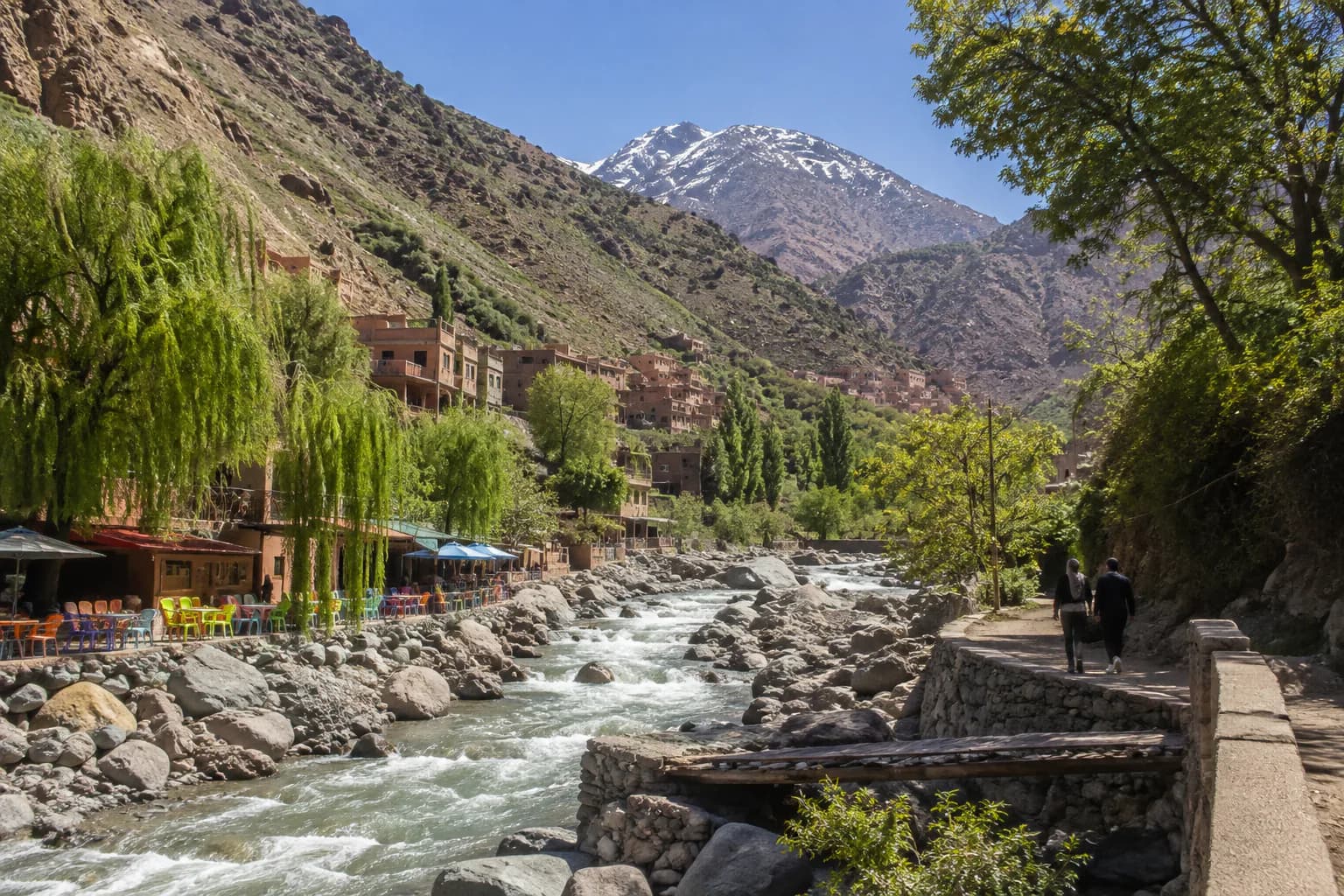
An hour and a quarter south of the city, the flat red plain buckles upward into the High Atlas, and the temperature drops eight to ten degrees. There's a cold, fast river. There are walnut trees. There are people eating lunch on plastic chairs actually in the water. After the medina it feels like someone has opened a window in a stuffy room.
I love it there. I go several times a year.
I'm also going to spend most of this article telling you how not to get ripped off, because the Ourika day trip is one of the most reliably fleeced experiences in the whole Marrakech region, and I'm tired of hearing about it.
My strongest opinion, straight away: don't book the group tour
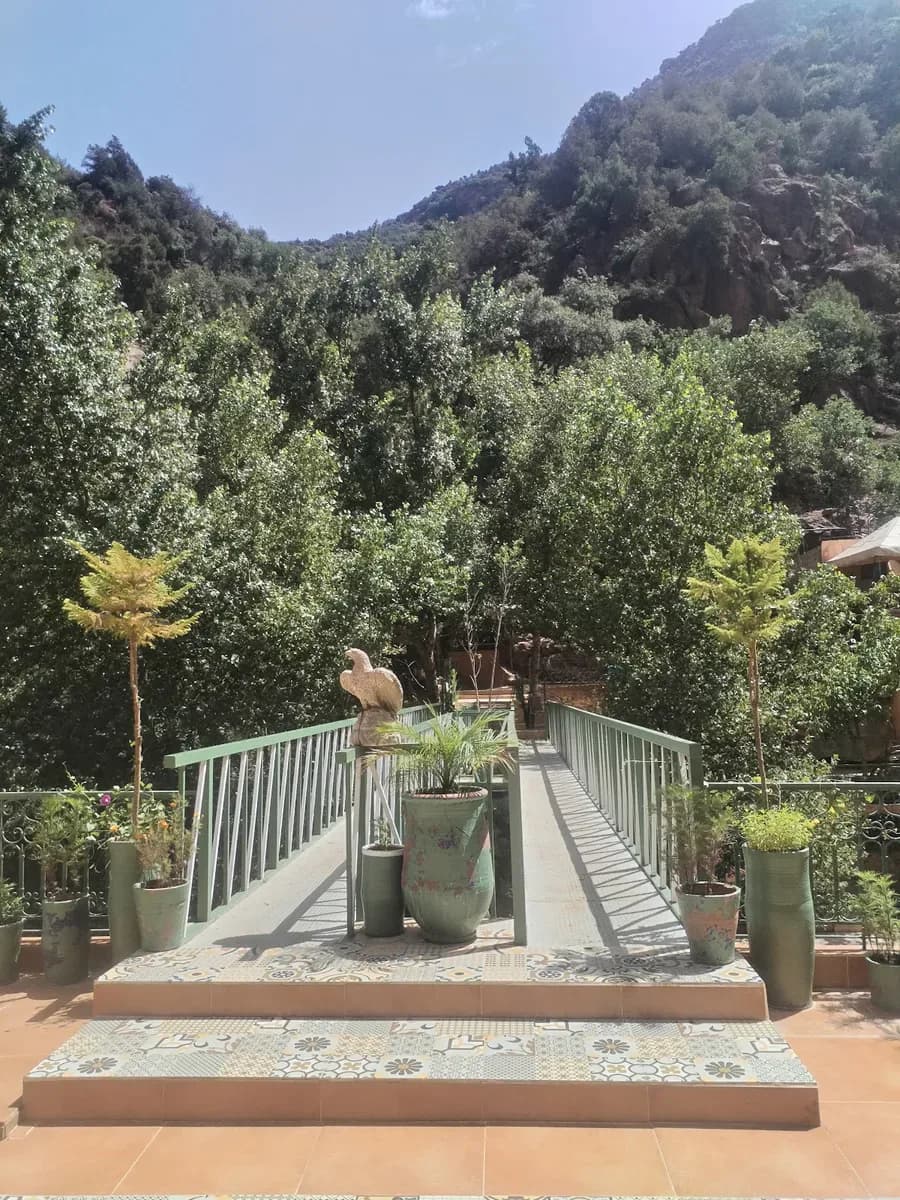
I know. It's the easy option, it's advertised in every riad lobby, and it's 250 to 400 dirhams a head with everything apparently included.
Here's what tends to actually happen on the cheap ones.
You stop at a roadside viewpoint where someone charges you a euro for the privilege of taking a photograph of a hill. You stop at a "women's argan cooperative" and get a demonstration followed by a hard sell, where a small bottle of oil goes for 200 dirhams — several times what it costs in the medina. Then you stop for lunch at a riverside restaurant where the set meal is 120 dirhams while the place next door, which is identical, charges 60.
And then there's the guide.
As you pull into Setti Fatma, a young man gets into the car. The driver says this is as far as the vehicle goes and introduces your waterfall guide, in a way that strongly implies he came with the package. He didn't. At the end of the walk, payment is expected, and the amount is not one you agreed to. When people complain to the agency afterwards, the agency says guides were never included.
That whole sequence is well documented and has been running for years. The stops are not random. They are commission.
So do it one of these two ways instead.
Hire a private driver for the day: 400 to 600 dirhams for the entire car. Split between three or four people that's cheaper than the group tour, and — this is the point — the driver takes you where you say. No cooperative. No souvenir shop. No mysterious extra passenger.
Or take a grand taxi, if you like a small adventure. They leave from Bab er-Rob by the medina walls, roughly 30 to 50 dirhams a person each way, though they don't depart until all six seats are full and you may change vehicles at Tnine Ourika. Journey time is one and a half to two hours. One warning: taxis back are easy to find in the morning and considerably less reliable in the late afternoon, so agree your return plan early. Negotiating a fare at dusk with tired legs is nobody's finest hour.
The waterfall guide is not compulsory. Say it with me.
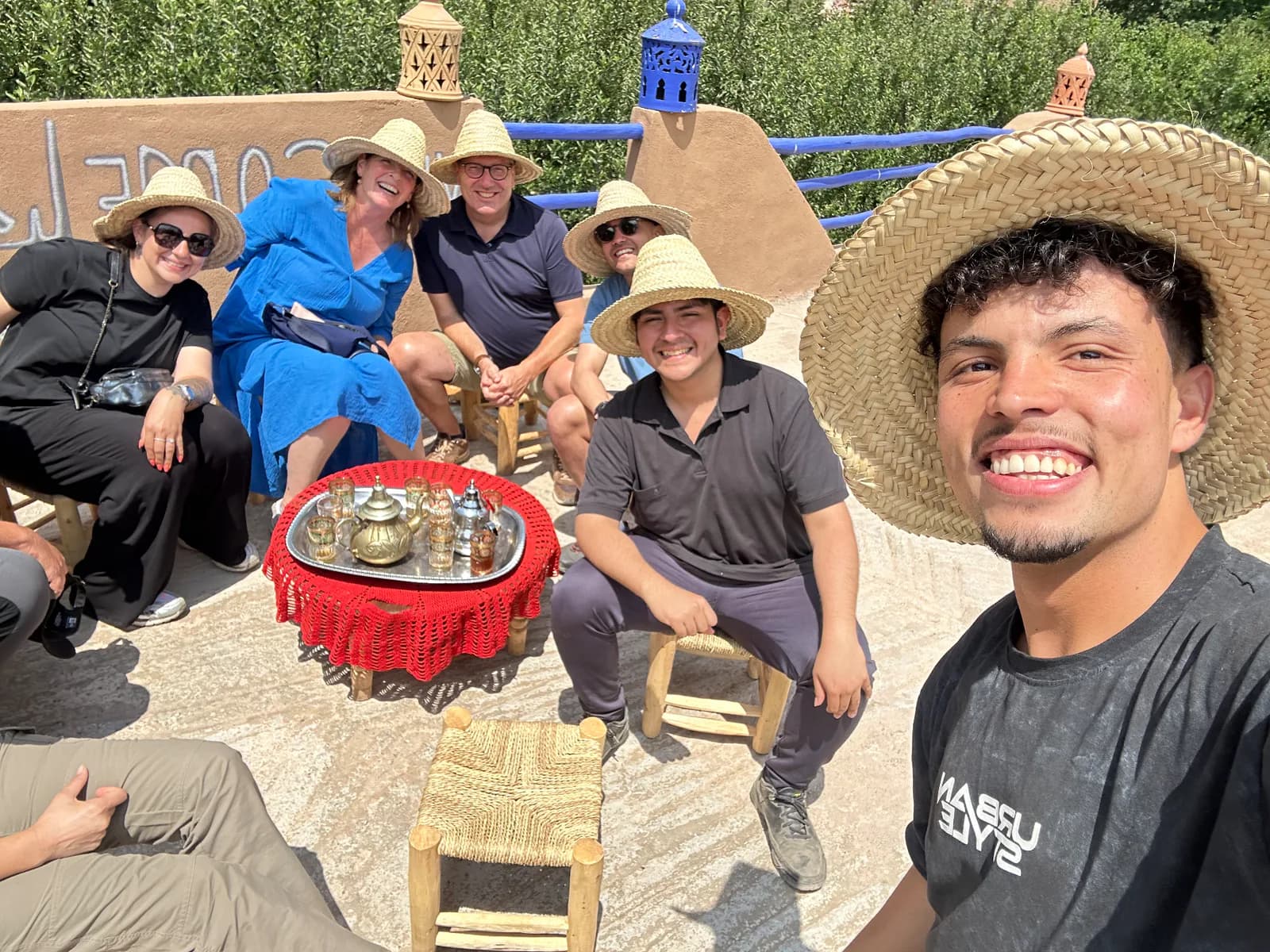
At the Setti Fatma car park, men will tell you a guide is mandatory for the waterfall walk.
It is not mandatory. There is no rule. There is no ticket office. The path is used by Moroccan families in sandals carrying picnics.
Now — I'm not saying never hire one. A local guide costs 50 to 100 dirhams for a whole group, which is genuinely fair money for someone who knows the route, and the higher sections get properly rocky. If you're nervous on uneven ground, or you're with kids, take one. That's a good use of a hundred dirhams. For a bookable guided option, Mountain Waterfalls ourika valley with guide tour covers this kind of valley and waterfall outing.
What I object to is being told you have no choice. Decide before you arrive, then hold your position pleasantly. "La, shukran" — no, thank you — delivered with a smile and continued walking, works on almost everything in this country.
What the waterfall walk is actually like
There are seven falls. Almost everybody sees the first one.
The path up to it takes maybe half an hour, crosses the river on some cheerfully improvised bridges, and ends at a cascade with a pool and a cluster of cafés. It's lovely and it's easy.
Between the first and the second, the difficulty jumps sharply. It becomes a rocky scramble with uneven steps and slippery patches, especially after rain. People turn back here regularly and there's absolutely no shame in it.
Wear real shoes. Closed toes, decent grip. I have watched a woman attempt this in wedge sandals and I think about her still.
Bring water, keep both hands free, and expect to be offered jewellery and fossils several times on the way up. A firm, friendly no is all that's needed.
How I'd actually spend the day
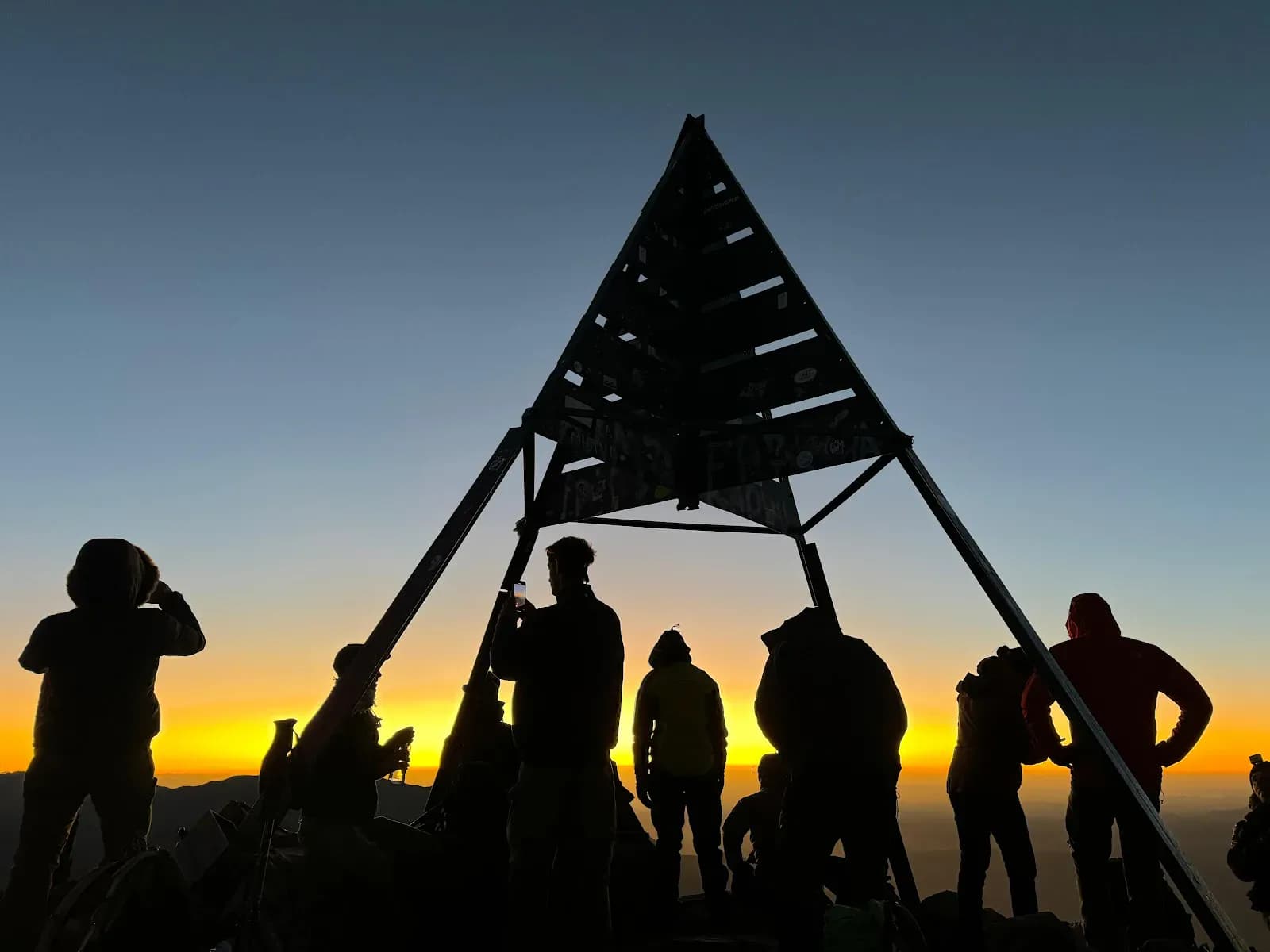
Leave Marrakech by 8:30. Genuinely early — the valley road clogs later and the walk is much nicer before the heat.
Drive up through Aghmat and the villages, with the river on one side and terraced barley on the other. Stop where youwant to stop, which is the whole benefit of not being on a tour bus.
Do the waterfall walk first, while you're fresh and the path is quiet. Then come down and have lunch by the river — a tagine at one of the riverside places, 60 to 120 dirhams, and if the tables are literally in the shallows, take one. Cold water over your feet, hot tagine in front of you, is one of the great sensations of a Moroccan summer.
Afternoon: potter. Visit an actual cooperative if you want oil, but buy it in the medina where you can compare prices, or from a place you chose rather than one your driver chose. Sit somewhere with mint tea. Watch the water.
Be heading back by four or five.
If it's a Monday, go early enough to catch the souk at Tnine Ourika — tnine means Monday, which is a helpfully literal piece of naming. It's a proper working Berber market, not a tourist one, and it's the best thing in the valley that nobody puts on an itinerary.
When to go, and when I'd tell you not to
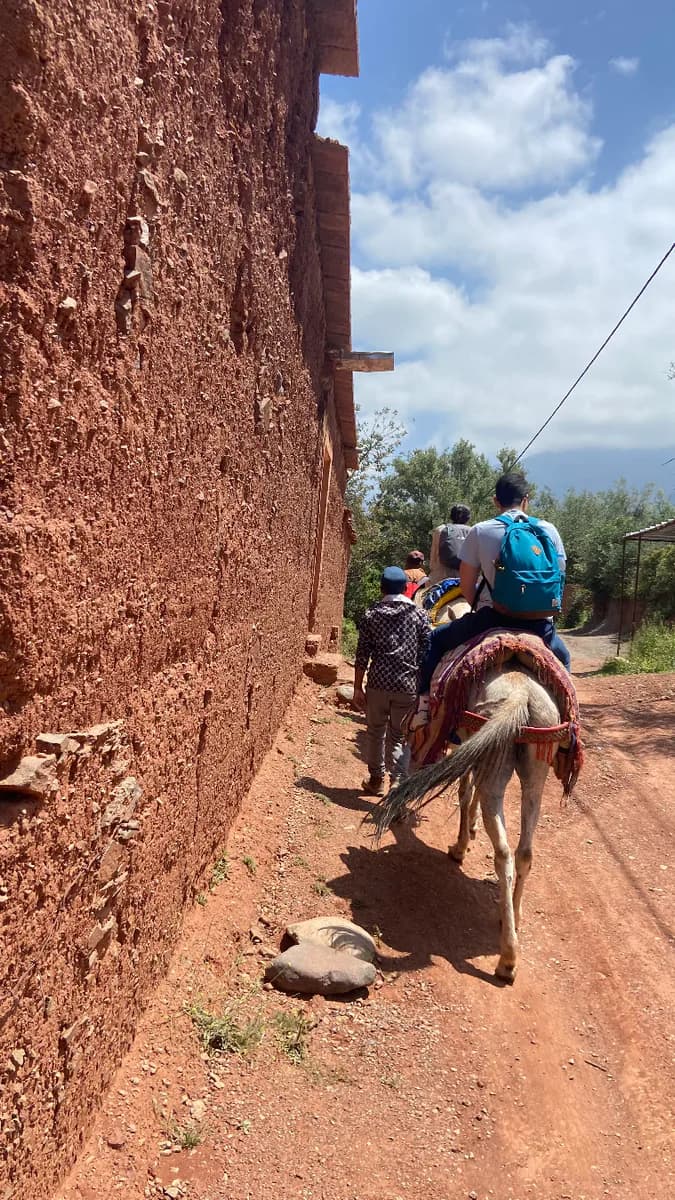
Spring is the best, and it's not close. March and April bring snowmelt, so the river runs full and loud, the valley is green, and late winter into early spring gives you almond blossom.
Autumn is calm and golden, 15 to 22 degrees, thinner crowds, excellent for photographs.
Summer works — that's the whole point of it — but the falls slow to a trickle and you're going for the shade, the pools and the temperature drop rather than for drama.
Do not go on a summer weekend. I mean this. Ourika is where Marrakchis escape too, and on a Friday or Saturday afternoon in July or August the valley road becomes genuinely gridlocked. You'll spend your cool mountain day in a stationary car. Midweek, always.
Winter is beautiful and cold, with snow above 2,000 metres, but heavy rain can flood the river and close the road to Setti Fatma. Check before you commit.
And one honest caveat
If you've already done Ourika, or you want something more dramatic, this isn't your trip. The Ouzoud waterfalls are far more spectacular. Imlil, at the foot of Toubkal, is proper mountain country with real hiking.
Ourika's virtue is that it's close. An hour and a bit, and you're in the mountains with your feet in cold water. It's not a wilderness expedition and it never claimed to be.
But on day four, when the medina has flattened you and you cannot look at another carved ceiling, it is exactly, precisely the right thing.
Just don't let anyone put a stranger in your car.