There's a thing visitors say about Marrakech that always makes me laugh: "the city really comes alive at night!"
Yes. It does. Because during the day it is trying to kill us.
I don't say that entirely as a joke. Morocco's national meteorological office, the DGM, regularly puts Marrakech under heat vigilance alerts through the summer, and August daytime highs here routinely sit at 42 to 44°C. In the heatwaves of recent summers, more than nineteen Moroccan cities passed 40°C in a single day, Marrakech among the provinces under amber alert, and the national record now stands at 50.4°C, set in Agadir in August 2023.
You cannot run a city in that. So we don't. We run it later.
The romance visitors feel about Marrakech evenings — the lanterns, the drums, the smoke, everyone out and warm and talking — is real, but it isn't decoration. It's thermodynamics. The sun here isn't a nice feature. It's a landlord who keeps putting up the rent, and around six o'clock he finally goes out for the evening.
The daily disappearing act
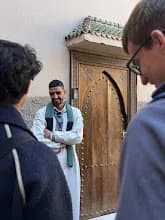
If you arrive in July and walk out at three in the afternoon, you'll think you've come to a ghost town. Shutters down. Streets empty. A cat asleep in the only piece of shade on the entire street, having clearly thought this through better than you have.
The only people outside at 3pm in August are tourists and people who have done something to deserve it.
Then, somewhere around five or six, you can physically watch the city reassemble. Shutters go up. Handcarts appear. Old men reclaim their café chairs with the seriousness of ambassadors taking their seats. By eight the streets are fuller than they were all day, and by ten there are children playing in squares at an hour that would horrify a Northern European parent.
They're not being spoiled. It's simply the first point in twenty-four hours when going outside is a pleasant thing to do rather than a medical decision.
Once you understand that, the whole city makes sense. And it changes how you plan your day: sleep or swim in the afternoon like everyone else, and go out when we do.
Jemaa el-Fnaa, which is the point of the evening
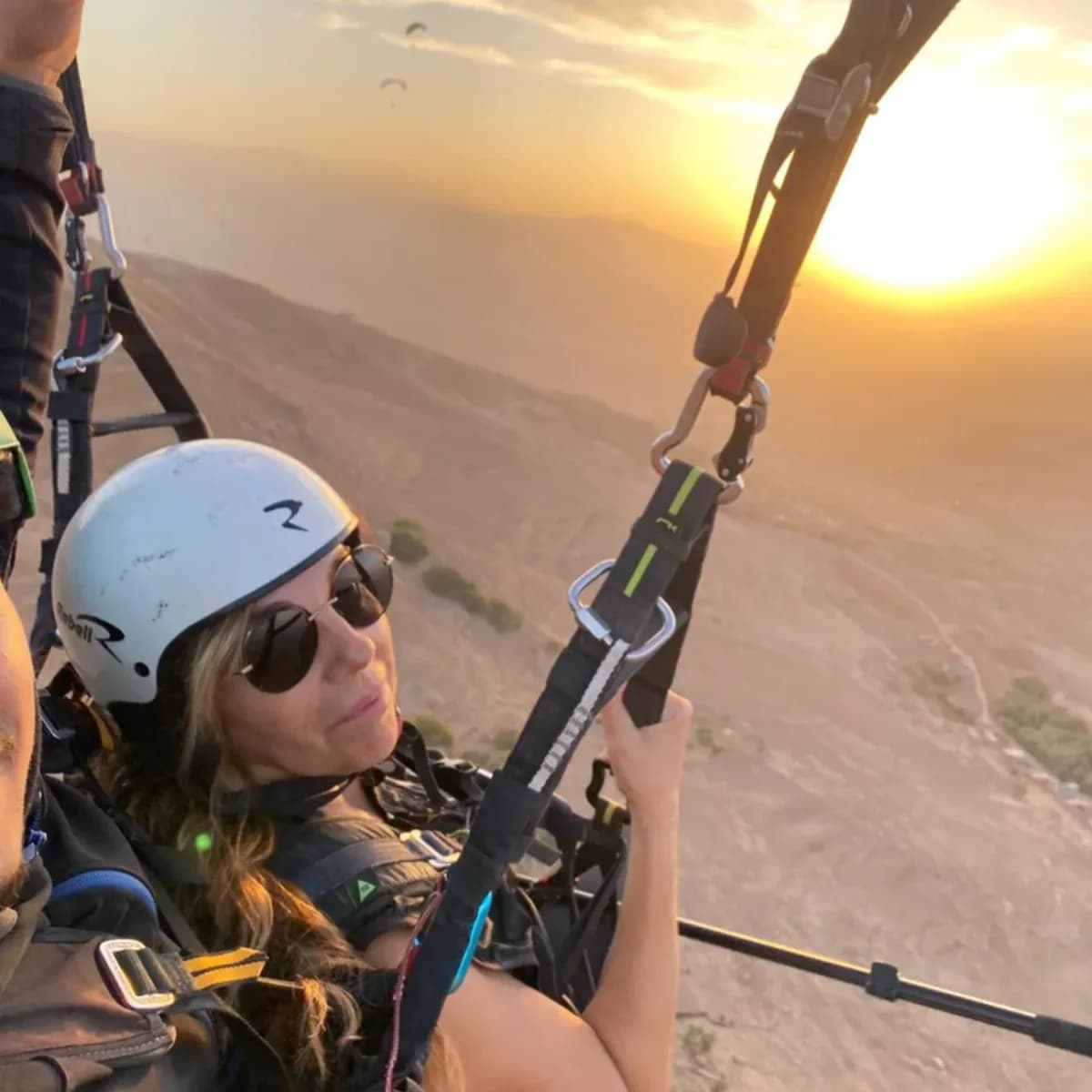
UNESCO's listing for Jemaa el-Fnaa specifically describes the square operating "all through the day, and well into the night," which is a rare case of a heritage document accurately describing a party.
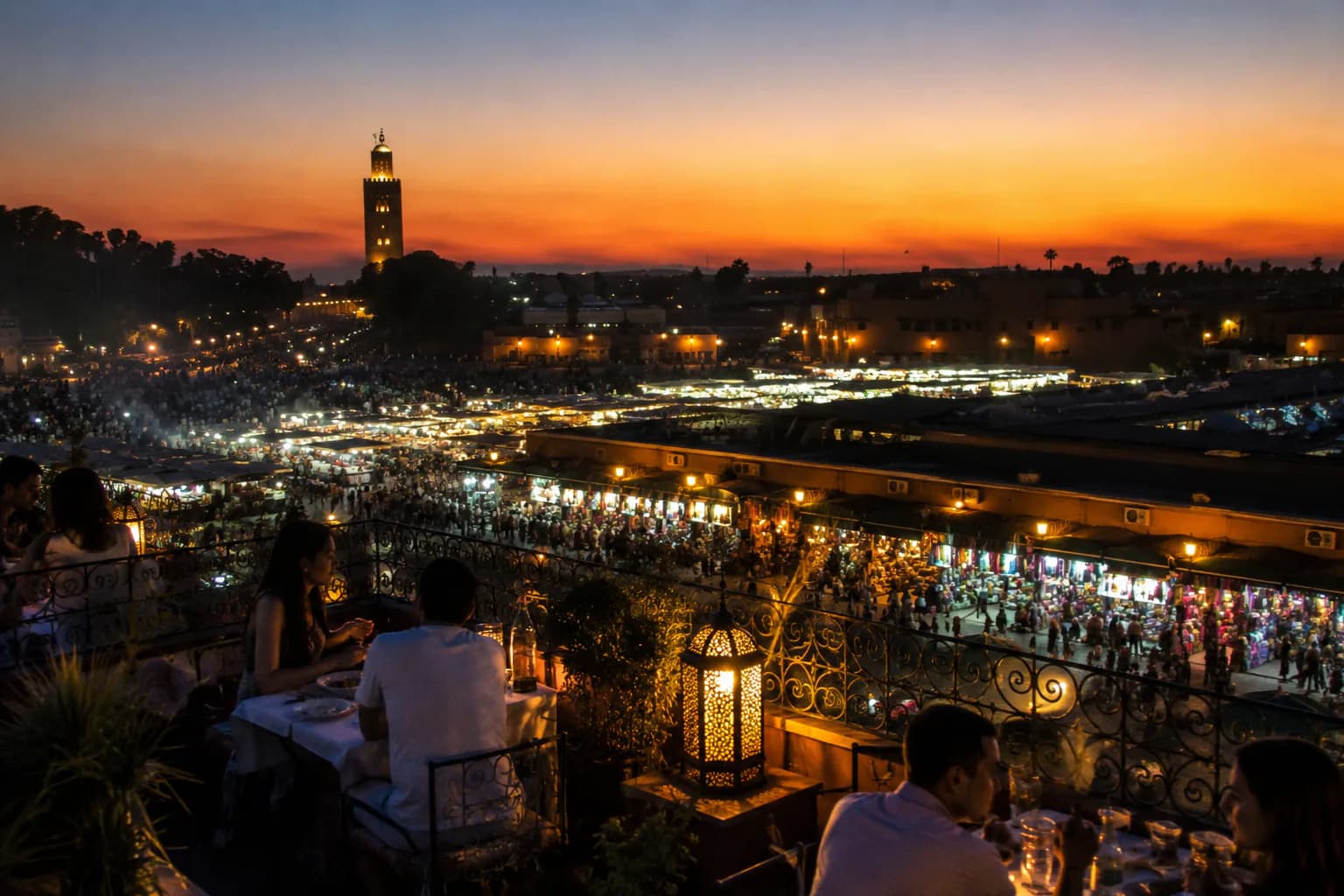
Get there around five and go up first. Take a terrace on the northern edge, order a mint tea you won't finish, and watch the square build itself out of nothing — handcarts, trestle tables, gas lamps, over a hundred food stalls where an hour earlier there was bare ground. For a guided version, Ajili's “Marrakech by Night: Jemaa el-Fnaa and the Medina Lights” fits neatly here.
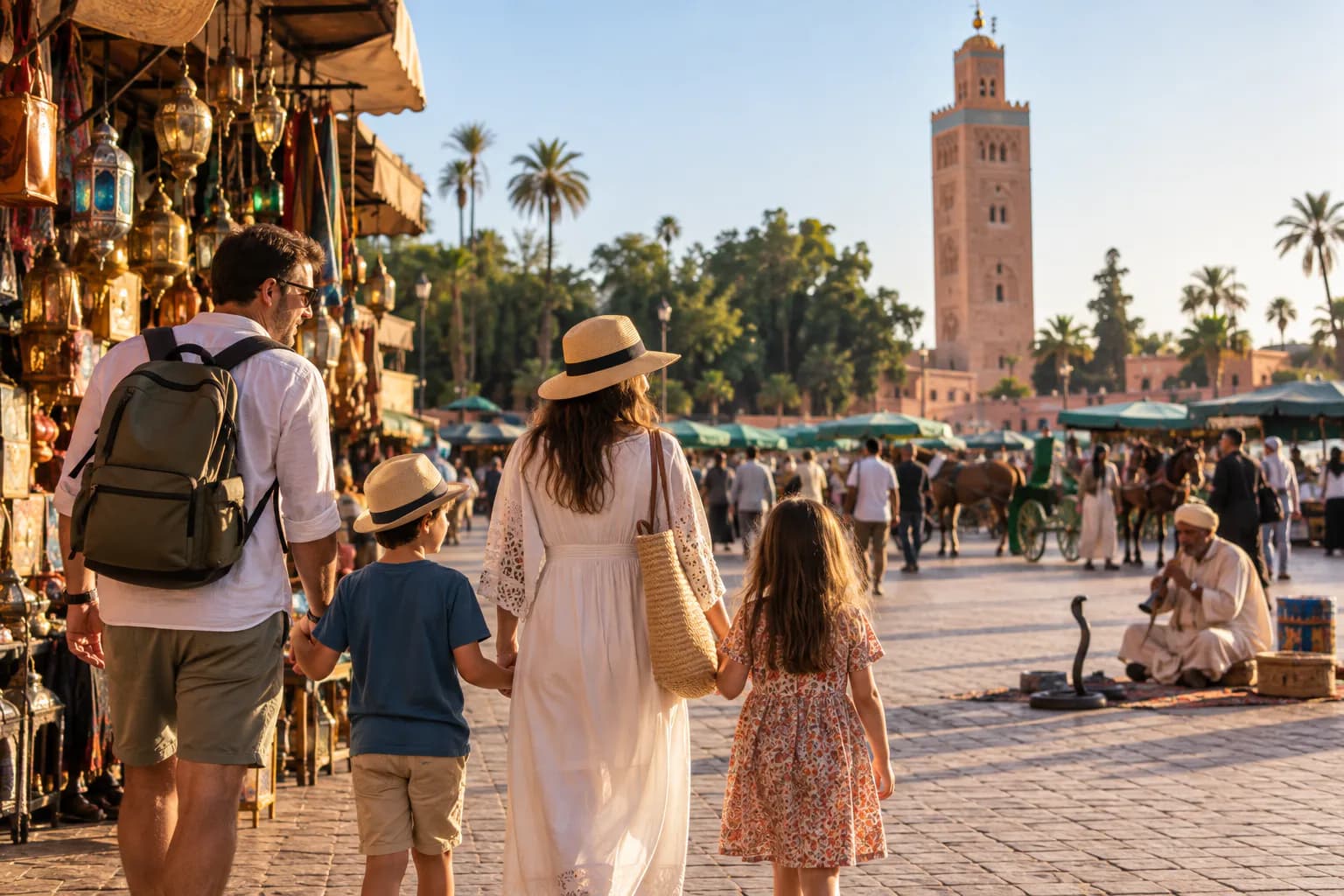
Then go down into it around eight. Harira soup, brochettes, snail soup if you're brave, drums, storytellers, a man who will absolutely try to put a snake on you. Agree every price before anything reaches your table.
It's the best free show in Morocco, and it's the one part of Marrakech nightlife that is genuinely for everybody — families, teenagers, grandmothers, tourists, all in the same square at eleven at night.
The half of the night most visitors never see
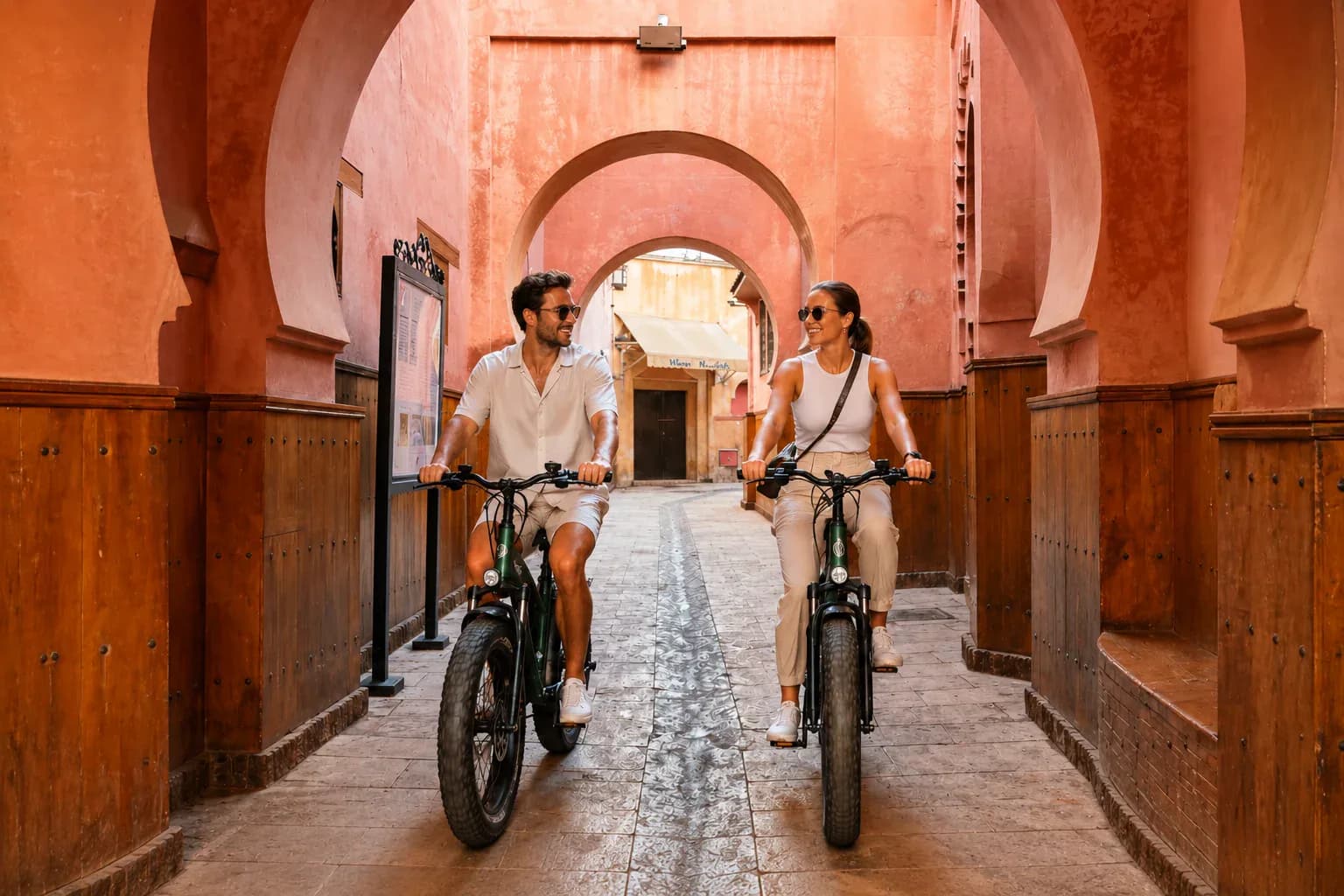
Here's my slight frustration with how people do Marrakech. They eat at a stall on the square, go back to the riad at ten, and think they've seen the city after dark.
They've seen half of it. The other half is fifteen minutes away in a taxi and runs on completely different rules.
Gueliz is the new town: modern bars, restaurants, lounges around Avenue Mohammed V and Rue de la Liberté. This is where Marrakchis my age actually go — it's walkable, it's mid-priced, and the crowd is a mix of locals and expats rather than tourists.
Hivernage is the upscale club district — Theatro, So Lounge, the big hotel bars. Doors around eleven, and here is the thing nobody tells you: arriving before midnight means dancing alone in an empty room. The local rhythm is dinner at nine or ten, a bar until midnight, and the club from one until four or five. Entry runs 100 to 300 MAD, usually with a drink included, and cocktails 80 to 150 MAD.
The medina rooftops are for earlier — sunset until eleven, Koutoubia views, better for looking than for dancing. Some now take reservations after 8pm and will turn you away when full, which caught me out on my own birthday, so learn from my humiliation and book.
Budget roughly 400 to 800 MAD a head for a full night out. Or about 200 for a good evening in Gueliz with local beer, which is what most of us actually do.
The alcohol question, answered plainly
Morocco is a Muslim-majority country and alcohol is regulated rather than hidden.
You can drink, legally, in licensed places: hotels, riad bars, rooftop terraces, restaurants in Gueliz and Hivernage, and clubs. Beer runs 25–40 MAD, wine 40–80 a glass, cocktails 80–150.
You cannot drink on the street. Not a beer walking between bars, not a bottle in the square. Police checks on this have increased, and "I didn't know" is not a fun conversation to have at one in the morning.
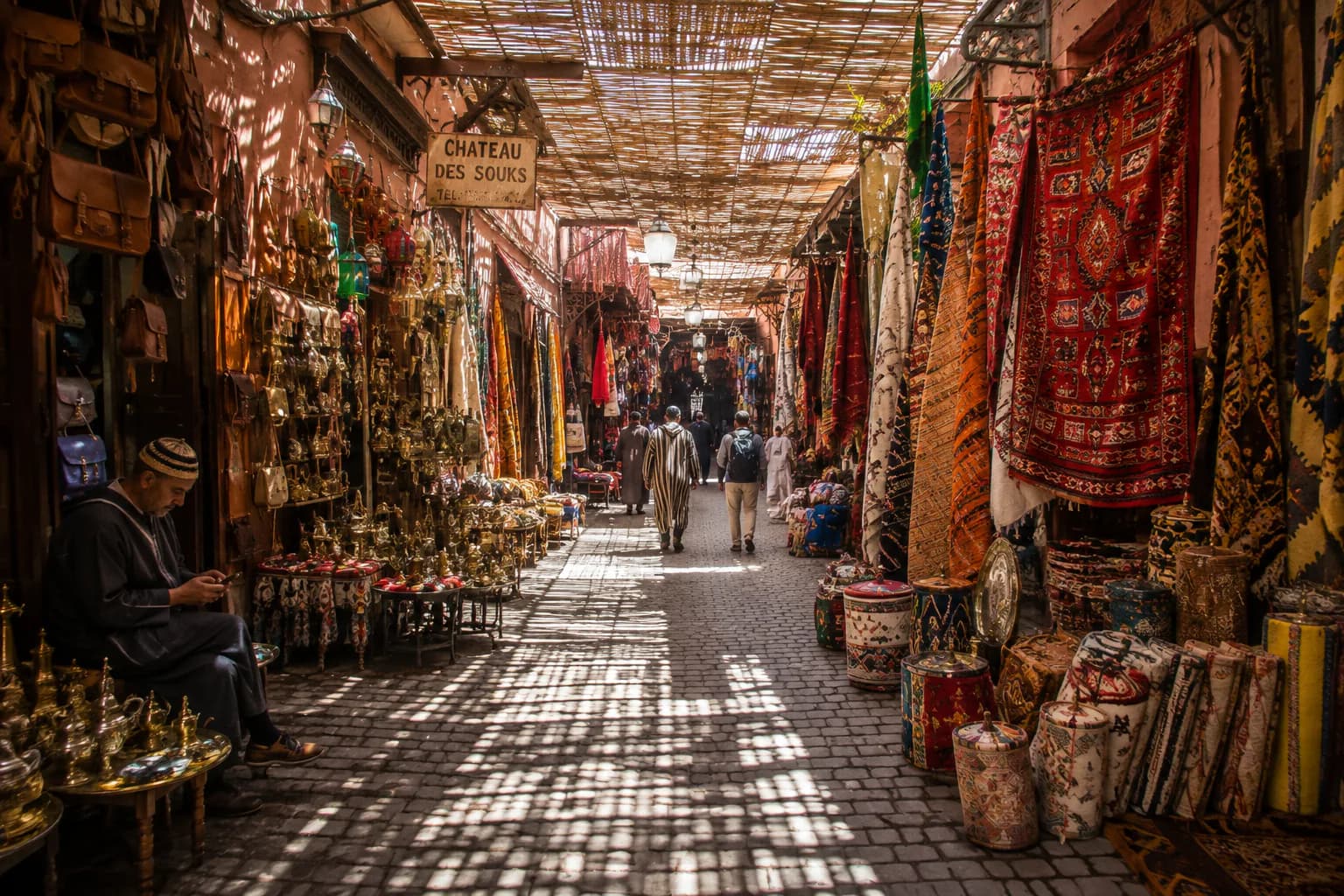
You also won't find alcohol in traditional medina restaurants or at the food stalls, and asking for it there is a bit like asking for a cigarette in a hospital. Nobody will shout at you. Everyone will look at you.
Things to do at night that aren't drinking
Because plenty of the best evenings here involve none.
Walk the walls. The ramparts and the Koutoubia are lit after dark and the whole city goes from red to amber. Free, and lovely.
Have a hammam at eight. Then eat something simple and sleep like you've been sedated.
Go to a café and order nothing exciting. Mint tea, an hour, a street to watch. This is the actual national pastime and it costs ten dirhams.
Eat late. Restaurants fill at nine or ten. Booking a table for seven means dining alone with the staff watching you, which some people enjoy and I do not.
Ice cream and a wander in Gueliz. Whole families do this. It is not sophisticated. It's the best.
Practical things that will save your night
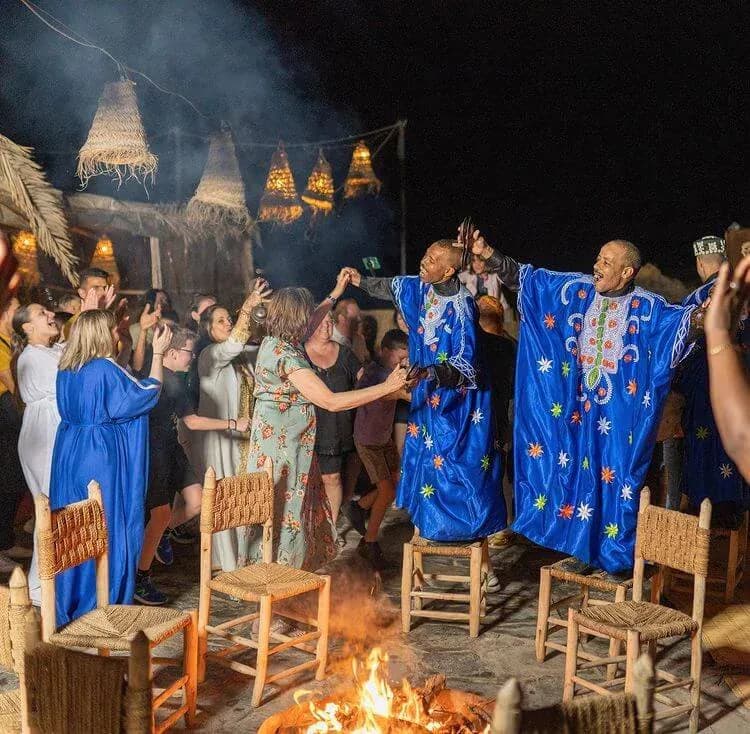
Agree the taxi fare before you get in. Meters develop mysterious faults after dark. Medina to Hivernage should be around 40–60 MAD, standard city rides 20–50.
Give the driver a landmark, not your riad address. The medina is a maze and your riad is down an alley he cannot enter. Name the nearest gate or a known restaurant.
Take cash out during the day. ATMs near the tourist areas genuinely run dry on weekend nights, and there is nothing like discovering that at 2am.
Dress smart for Gueliz and Hivernage — the clubs enforce it, no shorts or flip-flops — and dress more modestly in the medina, not because of any law but because you'll feel more comfortable.
Everyone smokes. Inside, outside, everywhere. Ask for an outdoor table if that matters to you.
And during Ramadan, everything inverts. The city sleeps through the day, then eats, shops and socialises until three or four in the morning. Some bars and clubs close entirely for the month. It's an extraordinary time to visit — just don't arrive expecting a normal timetable.
My perfect Marrakech night
Nap at four, because I am not a hero.
Rooftop at six for the call to prayer going up across the medina while the light turns. Down into Jemaa el-Fnaa at eight for grilled food and too much bread. A walk past the lit-up Koutoubia at ten. Then a taxi to Gueliz, a table outside somewhere with music that isn't too loud, and home whenever.
No clubs. Sometimes clubs. It depends who's calling.
And that's the real answer to what to do in Marrakech at night: whatever you'd do in the day, but now it's twenty degrees cooler and everyone you meet is in a considerably better mood.
Including, finally, the cat.