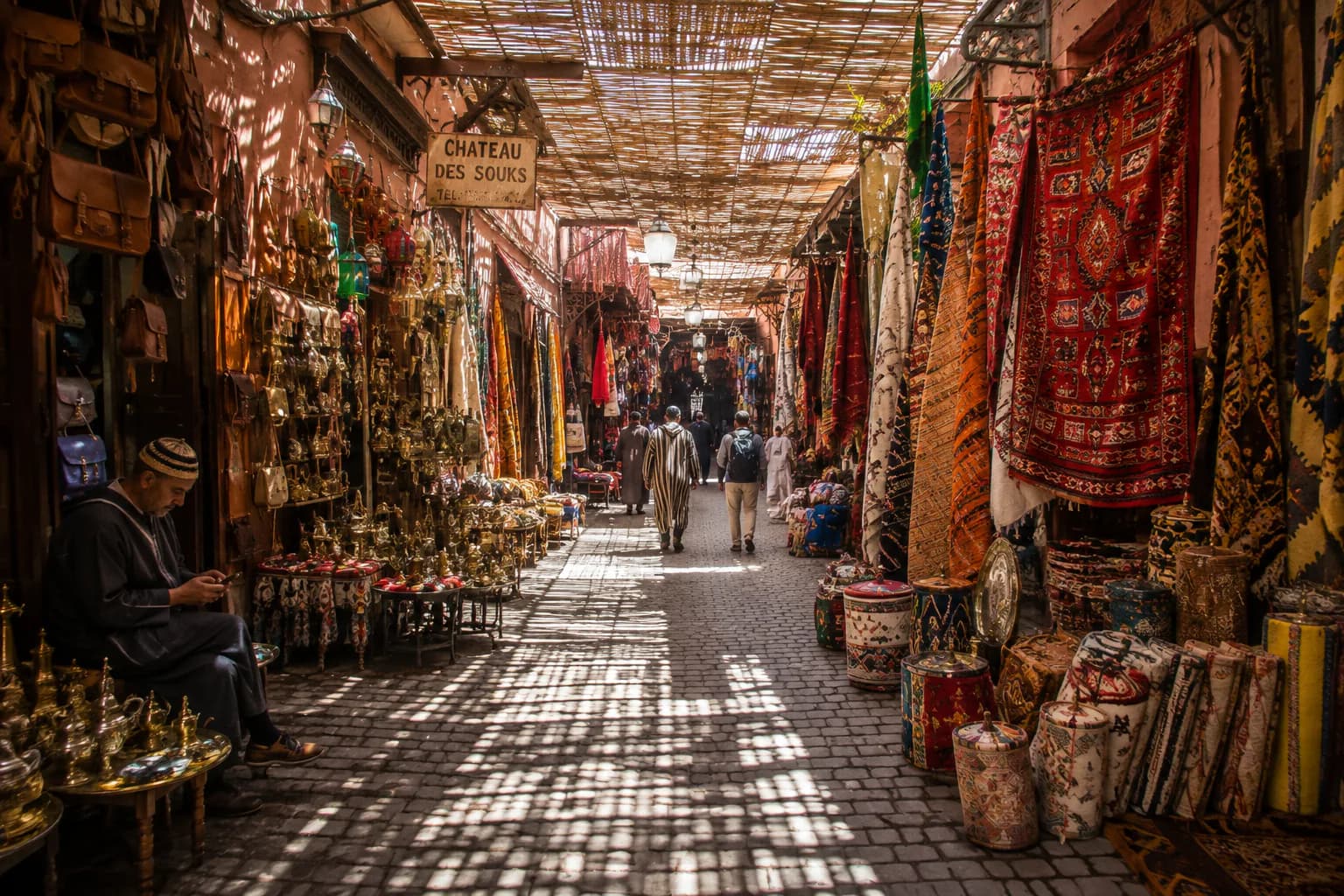
I want to tell you about the first time I took a foreign friend shopping in the souks.
She found a lantern she loved. The man said 600 dirhams. She said, brightly, "oh, that's fine!" and reached for her purse, and I had to physically take her wrist. Not because 600 was outrageous — it wasn't, wildly — but because she had just told him, in one sentence, that she had no idea what anything costs and would pay whatever was asked.
We got it for 220. It took eleven minutes and two glasses of tea, and he was perfectly happy, because he'd have been happy at 180 too.
That's the thing nobody explains properly. Haggling here isn't a fight. It's a conversation with numbers in it, and everybody knows the rules except you. So let me give you the rules.
First, understand what the opening price is
The first number you hear is not a price. It's an opening position, and it's typically three to four times what the item will actually sell for.
This is not because you're being cheated. It's because that's how the transaction is structured, for everyone. My aunt gets an inflated opening price too. Hers is just less inflated than yours, because she looks like she'll walk.
So: start at around 30 to 40% of the asking price and expect to settle near half of it. If the seller accepts your first counter-offer instantly and looks delighted, you started too high. Note it for next time. Don't sulk.
The eight rules I actually use
1. Never name a price first. If a vendor asks what you'd pay, deflect. "What's your best price?" The person who names a number first has given up information for free.
2. Walk away, and mean it. This is the entire game. Not a theatrical flounce with a backward glance — just a genuine "thank you, it's lovely," and leave. If your number was reasonable, you'll be called back before you reach the corner. If you aren't, it wasn't. Either way you learned the real price, which is useful.
3. Go deeper. Stalls in the first hundred metres off Jemaa el-Fna charge two to three times what the same item costs further in. The deeper into the maze you go, the more the prices are aimed at people who live here.
4. Never shop with a guide. I'm blunt about this. Anyone who brings you to a shop takes a commission, commonly 30 to 40%, and it is added to your price, not deducted from the shopkeeper's. That includes the friendly man who offers to show you a "cooperative." Shop alone or with the person you came with.
5. Look before you buy. Spend your first day pricing things without buying anything. Ask three shops what the same lantern costs. By the third you'll have a range in your head, and everything afterwards is easy. Buy on your last full day.
6. Bring cash, in small notes. Assume cash only. A few larger rug and jewellery shops take cards, usually with a 5–10% surcharge, which is not a discount on your negotiation, it's an addition.
7. Go in the morning. Between nine and eleven the souks are calm and the light through the trellis roofs is beautiful. There's also a lovely bit of custom around the first sale of the day being lucky, and some sellers will shade the price for it. I make no promises. But I do shop early.
8. Say no clearly and warmly. "La, shukran" with a smile, and keep walking. Half-hearted browsing is read, correctly, as interest.
What things actually cost

These are realistic post-haggle 2026 prices. Vendors will open far above them.
- Item: Fair price after haggling
- Babouches (leather slippers): 80–200 MAD
- Small lantern: from 30 MAD
- Medium hanging lantern: 300–800 MAD
- Leather pouf cover (unstuffed): 400–800 MAD
- Kilim: 800–3,000 MAD
- Larger Berber rug: 3,000–15,000 MAD
- Argan oil, 100 ml: 150–300 MAD
- Saffron: 30–50 MAD per gram
- Ras el hanout, 100 g: 30–60 MAD
- Ghassoul clay, 1 kg: 60–100 MAD
- Beldi black soap, jar: 40–80 MAD
- Brass tea tray: 200–500 MAD
- Scarf: 20–70 MAD
- Djellaba: 300–1,200 MAD
I've included this as a table because it's the one thing in this article you'll want to look at again while standing in a shop. Screenshot it.
How to spot the fakes
This is where I can actually save you money, because overpaying by 50 dirhams is annoying but buying fake saffron is a waste of the whole purchase.
Rugs — flip it over. A handmade rug shows irregular knots and the pattern reads clearly on the reverse. Machine-made rugs have a smooth backing, often with a fabric strip carrying washing instructions. For anything over roughly €150, ask for a Centre Artisanal certificate of origin. A real dealer will produce one without blinking.
Argan oil — put it on your hand. Genuine cosmetic argan absorbs within about a minute. If it sits greasy on the surface it's cut with something cheaper. Cosmetic argan is pale and almost odourless; culinary argan is darker and smells properly nutty. Buy from a women's cooperative or a fixed-price shop, not from a man with a table.
Saffron — look at the threads. Real saffron is long red threads, 30 to 50 dirhams a gram. Short threads, yellow bits or a suspiciously large bag for very little money is dyed safflower. It'll colour your rice and taste of nothing.
Silver — carry a small magnet. Silver isn't magnetic. It takes two seconds and vendors selling real silver won't mind at all.
"Cactus silk" — be sceptical. True sabra is made from agave fibre and is not common or cheap. Most of what's sold under that name is viscose. It's perfectly pretty and makes a nice cushion cover. Just don't pay silk prices for rayon.
Fossils — check for plaster. Ouarzazate and Erfoud produce real ones. The souks also produce moulded ones.
Where to go for what
Souk Semmarine is the main artery running north from Jemaa el-Fna under an iron trellis. Everything, everyone, highest prices.
If you want a guided introduction before exploring on your own, Marrakech Medina, Souks & Lanterns Walk is a natural place to start.
Souk Cherratine and Souk Smata are leather: bags, belts, babouches, and small workshops where you can watch the stitching happen.
Souk Haddadine is the ironworkers' lane. You'll hear it before you see it. This is where a great many of the lanterns sold all over the medina are actually made, which tells you something about where to buy one.
Souk Zrabi, also called the Criée Berbère, is rugs and kilims around a small square. Long tea sessions, serious negotiation, real money. Take your time here.
Rahba Kedima is the spice square. Also the best place in the souks to stand still for five minutes and just watch.
Souk des Teinturiers is the dyers' alley with skeins of wool hanging overhead in indigo and fuchsia. Mostly for looking, and it's worth it.
And if you want to opt out of the whole business: the Ensemble Artisanal sells fixed-price, decent-quality crafts with no negotiation at all. Prices are a little above a good haggle and well below a bad one. There's no shame in it — it's also a useful place to calibrate before you go into the souks properly.
Two things about manners
Don't haggle over ten dirhams. That's a euro. It matters more to the man who spent three days making the thing than it does to you, and getting theatrical over small change is the fastest way to look ridiculous.
And don't start negotiating something you don't intend to buy. Once a real conversation begins and tea is poured, you've entered something. Browsing is completely fine — just don't take a price down to the bone and then wander off. That's not shrewd. That's rude.
One last thing
Friday runs late. Many shops open around one in the afternoon after midday prayers, and some smaller workshops don't open Friday morning at all. Plan your big shopping day for literally any other day.
And when you find the thing you actually love — the rug, the lantern, whichever object you're going to look at for the next twenty years — pay attention to whether you're arguing to win or arguing to be fair.
I've talked people down brilliantly and then regretted it, and I've paid over the odds for something I still smile at every morning. Only one of those is a bad deal.