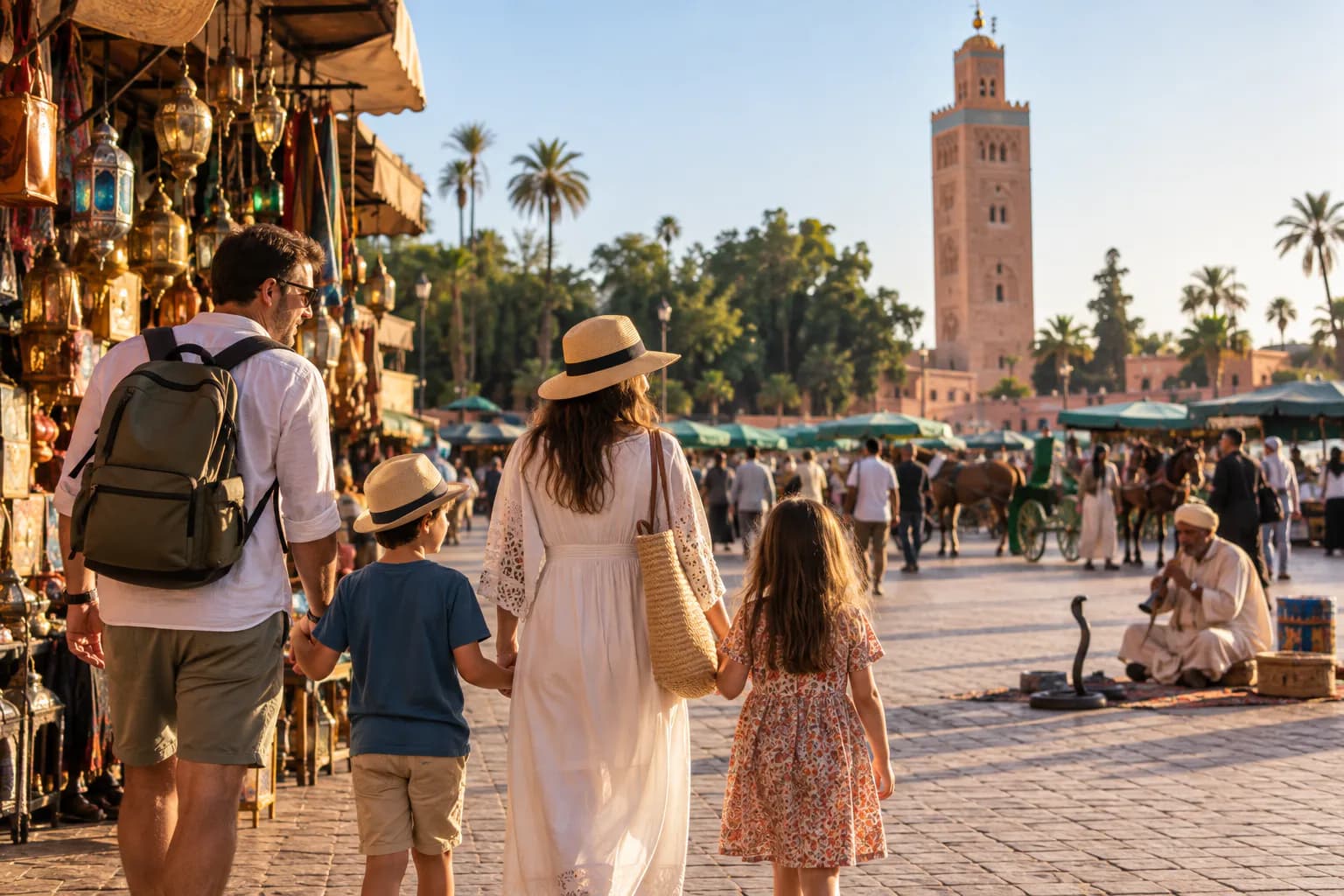
Here's the thing nobody warns you about Jemaa el-Fnaa: if you turn up at two in the afternoon, you will wonder what all the fuss is about.
A big dusty rectangle. Some orange juice carts. A few pigeons. The Koutoubia minaret in the distance. You'll take a photo out of politeness and quietly suspect that the most famous square in Morocco is a bit of a con.
Come back at six. The square you saw doesn't exist anymore.
First, the name (it's a good one)
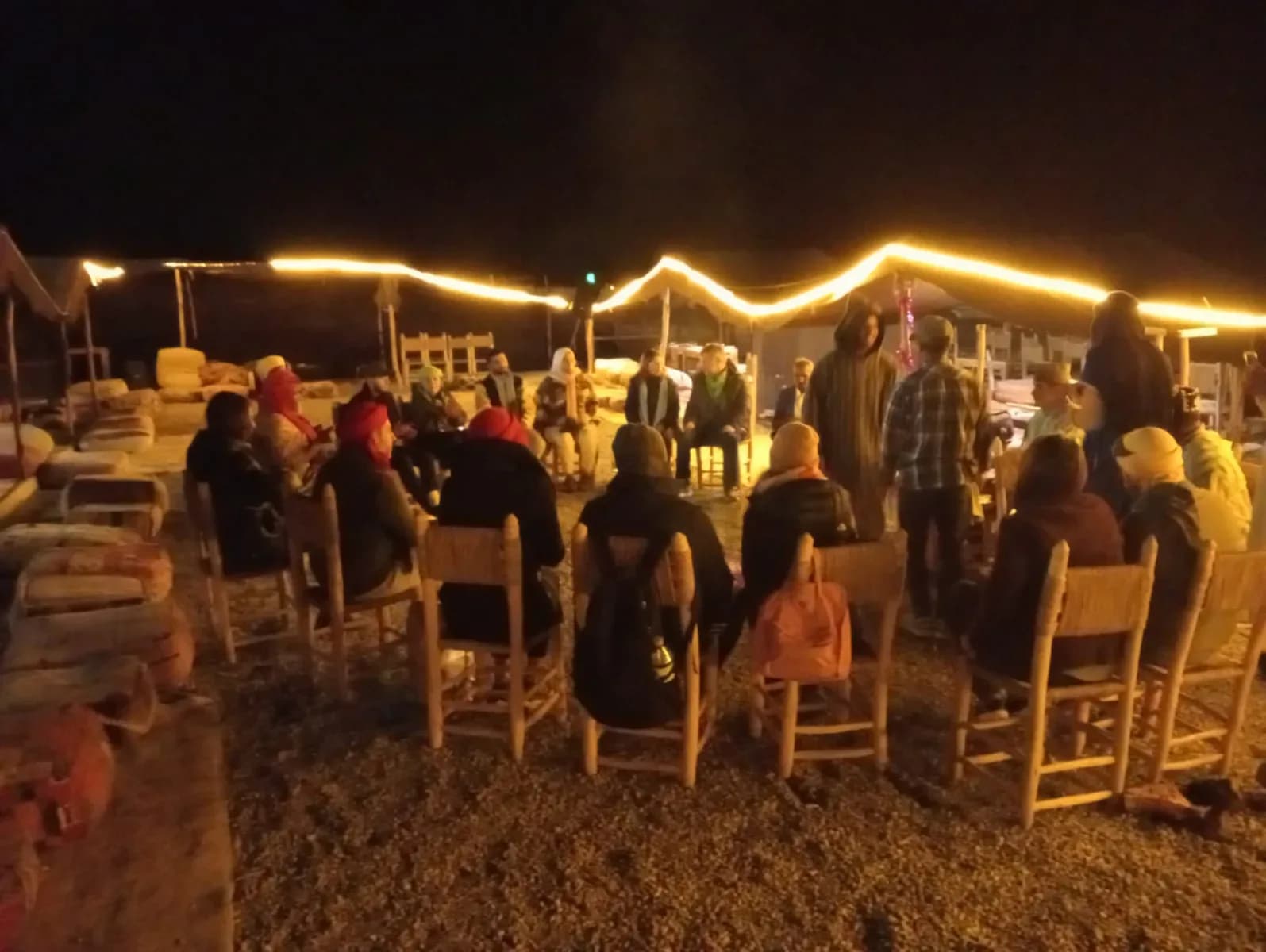
Nobody fully agrees what Jemaa el-Fnaa means, which is somehow perfect. Jamaa means congregation or mosque; fnacan mean an open courtyard — or annihilation. So translations range from the sensible "the gathering place" to the gloriously grim "assembly of the dead", a reference to public executions held here around 1050.
Historians mostly favour the boring answer: a mosque begun in the late 16th century, never finished, left to ruin. Tell people the execution version anyway. It's better at dinner.
What matters more is 2001, when UNESCO named the square a Masterpiece of the Oral and Intangible Heritage of Humanity — the first cultural space in the world to get that designation. It happened because the Spanish writer Juan Goytisolo campaigned against plans for a tower block and an underground car park, arguing that the square's value wasn't in its stones but in what happened on them. UNESCO agreed. You are not visiting a monument. You're visiting a thousand-year-old habit.
The transformation: a timeline of the evening
Around 4–5pm. The light goes gold and the square starts assembling itself. Handcarts arrive. Trestle tables appear where there was bare earth. Watching the food stalls being built is genuinely one of the best free shows in Marrakech, and roughly nobody does it because everyone shows up later.
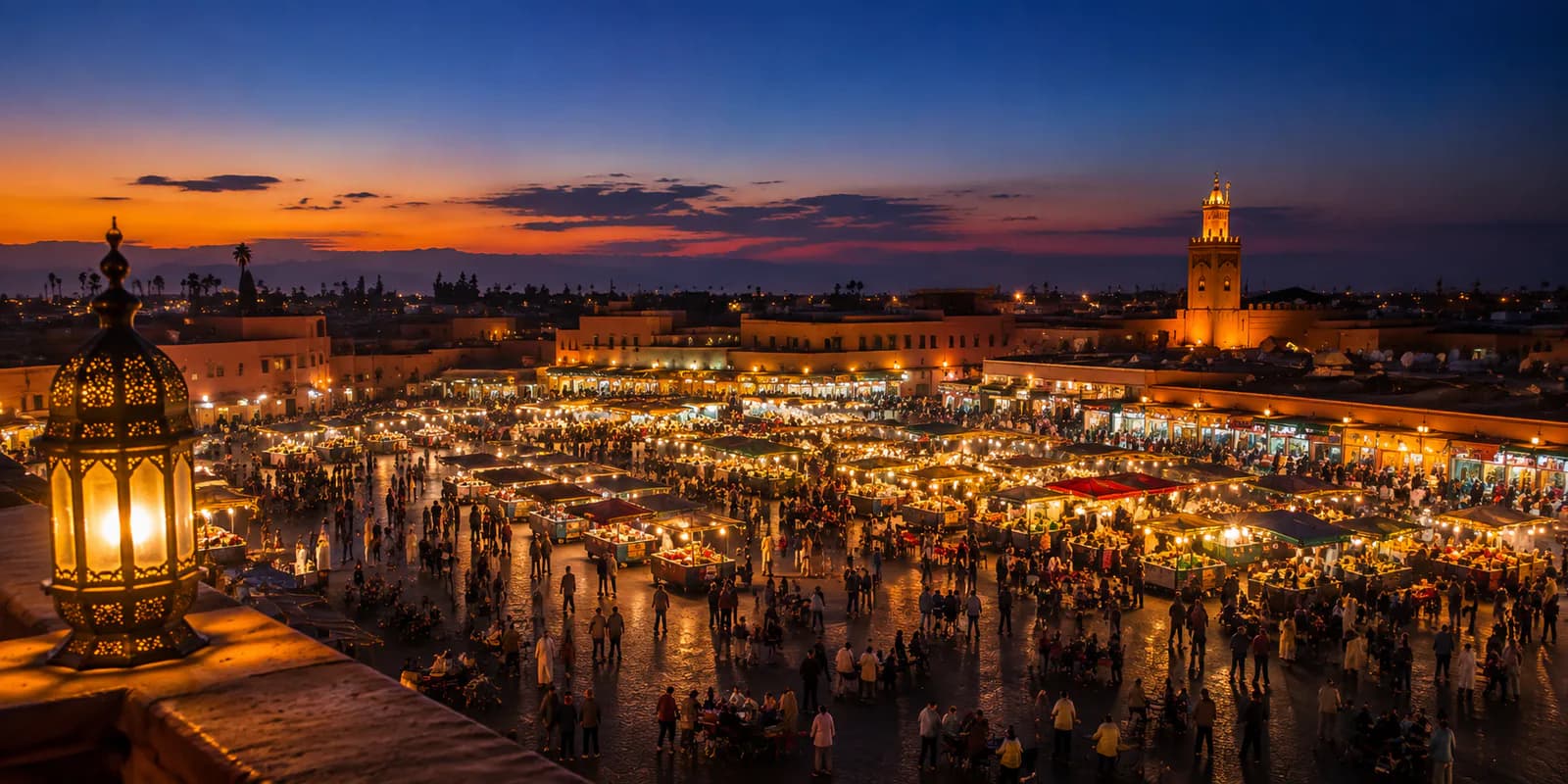
6–6:30pm. The sun drops behind the Koutoubia. More than a hundred stalls assemble in tight rows, creating a temporary open-air restaurant that seats thousands. Smoke rises in columns.
7pm to midnight. Peak. Gnawa bass lines, drumming circles, the clatter of plates, and a stallholder trying to pull you onto his bench with a joke he's told nine thousand times and still delivers well.
After midnight. It thins out and softens, and gets rather lovely. If you only get one night, this is the hour locals like.
One scheduling note: most stalls don't open on Fridays. Plan around it.
What to eat, and what it should cost
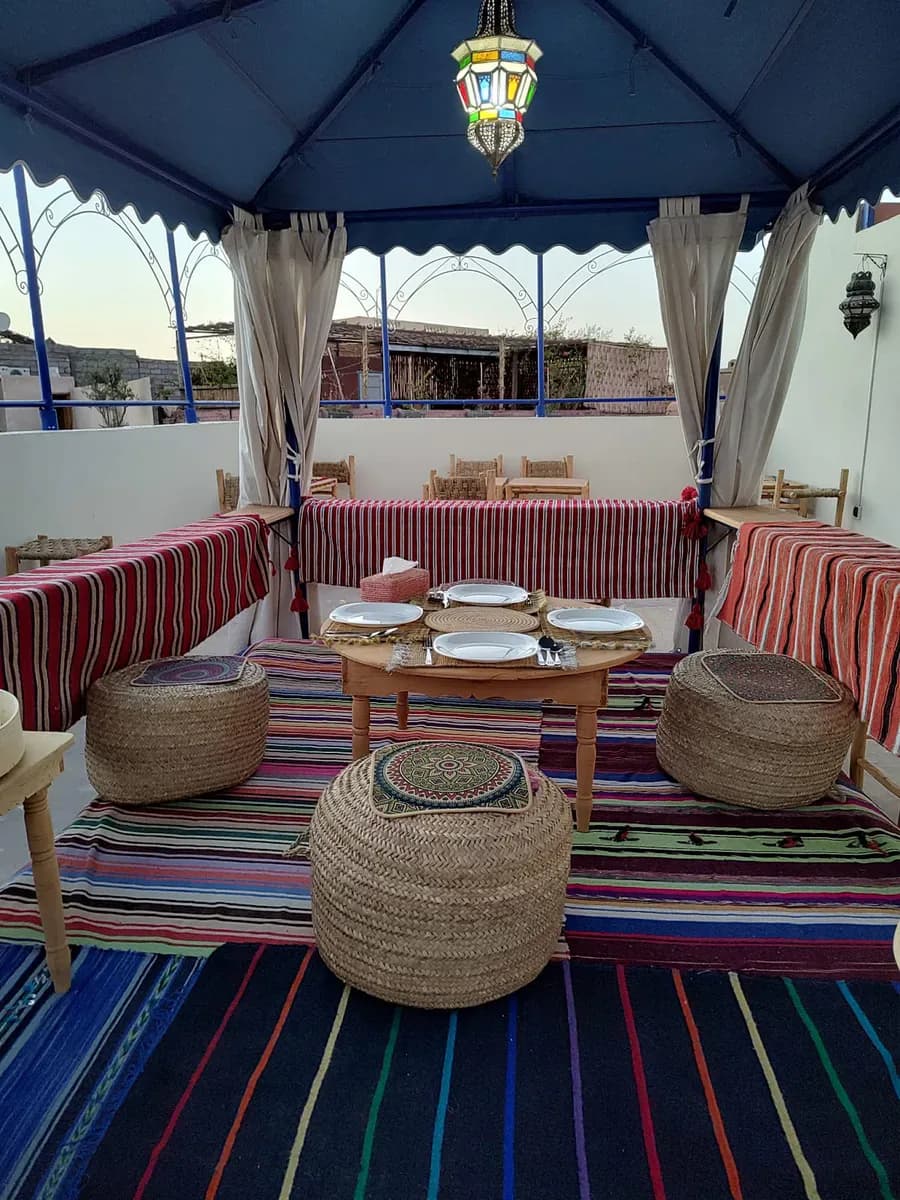
Food is the main event. It's also where people get fleeced, so here's the only rule that matters:
Agree the price before anything touches the table.
The classic move: you sit down, and bread, olives and little dishes of sauce appear before you've ordered. They are not free. Once you're seated with food in front of you, your negotiating power is zero. Ask bshal? or combien?, and if a stall has no written menu with prices, walk to the next one. There are a hundred more.
Realistic 2026 prices — a dollar is roughly 10 dirhams:
Harira, the soup everyone starts with: 10–20 MAD
Brochettes: 5–10 MAD each
A full plate of grilled meat, bread and salad: 40–80 MAD
Fresh orange juice: 5–10 MAD
Snail soup (babbouche): 5–10 MAD
Sources put a full evening of eating at 100–150 MAD per person; budget 200–300 MAD once you add juice, mint tea and tips.
Order the snails. Babbouche comes in a broth of about fifteen spices, you fish them out with a pin, and you drink the liquid afterwards like a shot. It's a dare that turns into a habit.
Find the khoudenjal urns on the southern edge — copper pots of hot spiced ginger tea, sold by men who've been doing it for decades. Costs almost nothing, and it's the most genuinely local thing you'll consume in the square.
And go around the corner. Mechoui Alley, a short lane off the north end, is where family-run shops pull whole lambs out of clay pit ovens and sell them by weight. Better than anything on the square, and forty seconds' walk away.
The performers: who's who

The circles that form around performers are called halqa — literally "circle" — and they're the reason UNESCO got involved.
Gnawa musicians. Guembri bass, metal qraqeb castanets, trance rhythms with sub-Saharan roots. They play mainly in the evening; 10–20 MAD is the customary contribution.
Storytellers (h'laiqiyya). The oldest act here and the one in trouble. Where there were once around twenty working the square, roughly five remain, losing out to television and phones. They perform in Darija, so you won't follow a word. Watch anyway — the theatre carries.
Acrobats and drum circles. Loud, athletic, genuinely skilled. Tip them.
Snake charmers and monkey handlers. Skip these. This isn't squeamishness — the animal welfare is grim, and the business model is getting a cobra onto your shoulders before a price is discussed. One couple was asked for €20 each after the fact. If you do want the photo, agree it first: 20–50 MAD is the going rate. Otherwise walk past without eye contact.
Take the rooftop shortcut
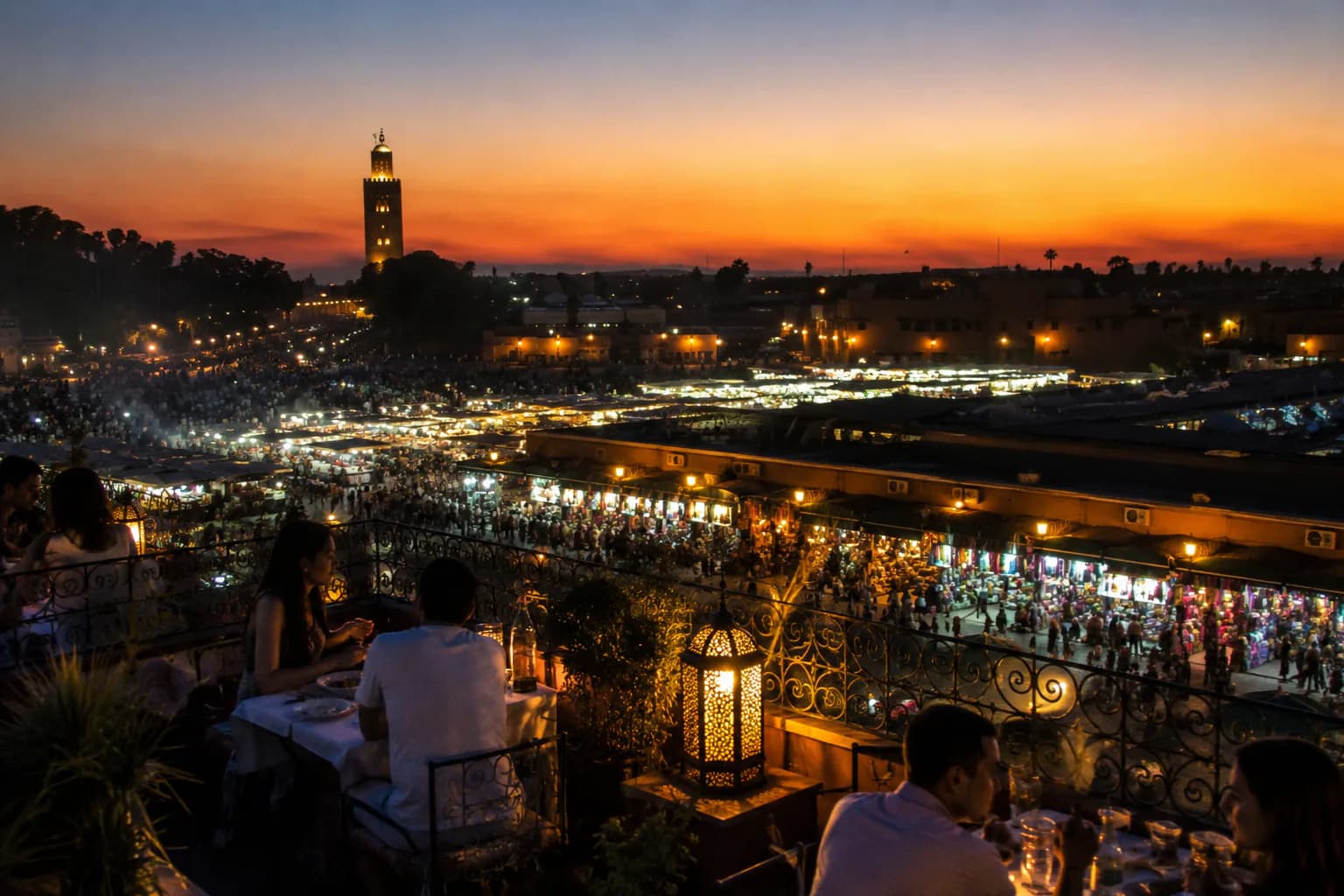
The single best move in the square is to leave it. The terraces ringing the northern edge — Le Grand Balcon du Café Glacier, Café de France, Café Argana — turn the chaos below into visible choreography.
Set expectations: you're buying the view, not the tea. Le Grand Balcon charges a cover of around 25 MAD, which includes a drink, and reviews of the actual beverages range from "fine" to genuinely funny. Go up around sunset, watch the square assemble itself from above, then go down into it. That sequence is the whole trip in ninety minutes.
The scams, briefly
They're not dangerous. They're relentless.
Henna ambush. Someone takes your hand, draws before you can decline, then asks 200–500 MAD. Never let paste out of the tube before price and placement are agreed. Book at a proper henna café off-square instead — the Henna Art Café on Riad Zitoun Lakdim starts around 50 MAD — cheaper, better, and no black dye.
Two menus. One price shouted at you, a different one once you sit down.
Photo charges. Photograph a performer and you've bought something. That's a fair deal, honestly — just know you're making it.
Unsolicited "help." The man who says the souk is closed today and he knows a better way. Nothing is free. Decline pleasantly and keep walking.
The square is generally safe at night: crowded, well lit, and patrolled by tourist police, with pickpockets the main thing to watch in the crush. Bring small notes — it's a cash economy, and nothing here takes a card.
The bottom line
Go twice. Once at 5pm, up on a terrace with a mint tea, watching a thousand-year-old machine assemble itself. Once at eleven, down in the smoke with a plate of brochettes and a soup full of snails.
Yes, it's touristy. Yes, someone will try to put a snake on you. It has also been happening every single night since before England had a parliament, and no square anywhere else does what this one does.
Just agree the price first.