Every Friday of my childhood smelled the same.
My mother started the couscous mid-morning, and by the time we came home the whole house had that particular warm cloud in it — steam, saffron, onions going soft and sweet. She steamed the semolina three separate times, which I thought was madness until the first time I tried to shortcut it as an adult and produced something with the texture of wet sand.
That's where I want to start, because Friday couscous is the heart of how Moroccans actually eat. And it's also the first thing I'd tell you about Marrakech: the best food here is not in the restaurants with the nice photographs out front. It's on a plastic stool at lunchtime, or in somebody's home, or handed to you in paper.
So here are twelve things to eat, roughly in the order I'd feed them to you if you came to stay.
1. Couscous — but only on Friday
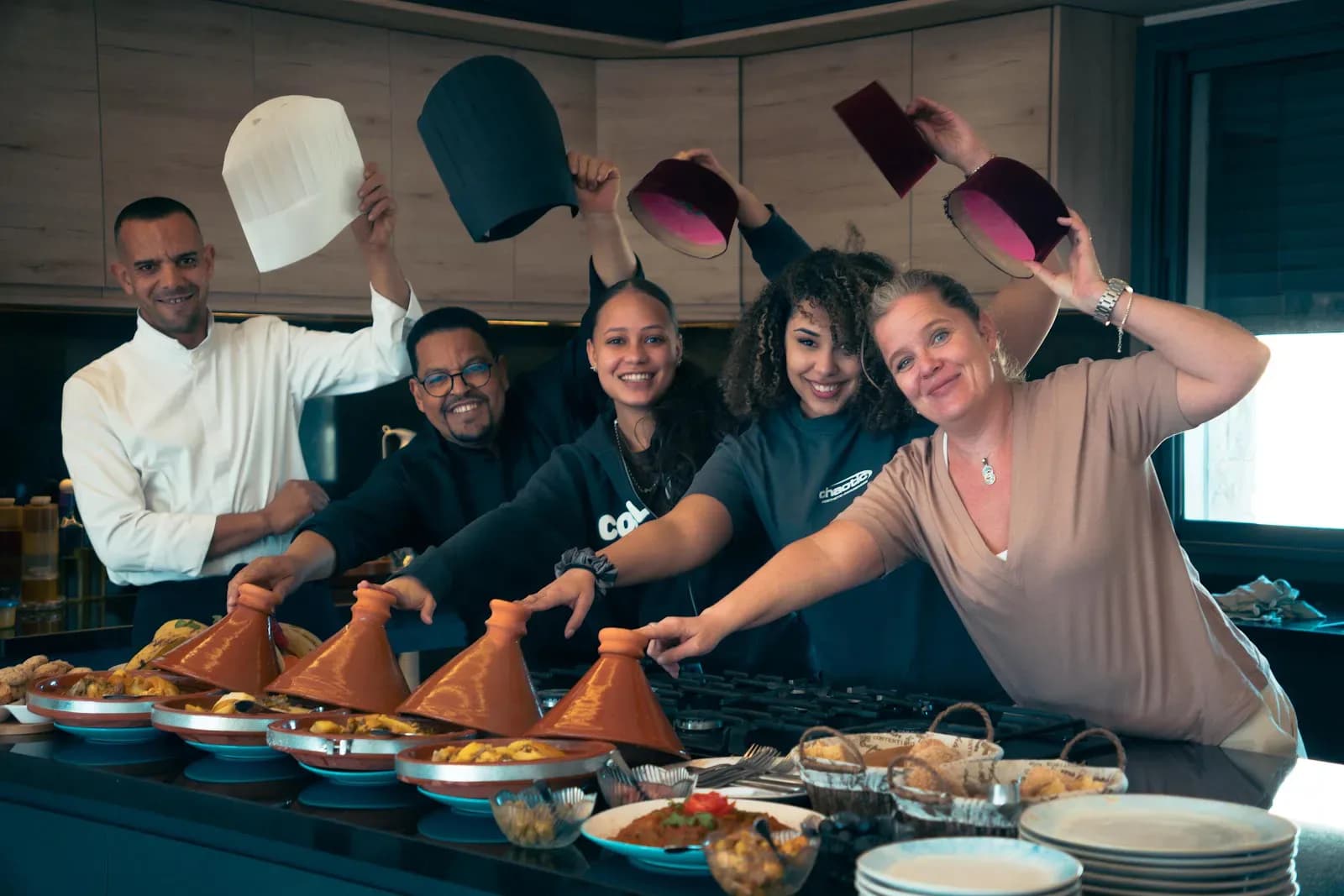
I'm going to be firm about this. Couscous is Friday food. It's what families eat together after midday prayers, and tourist restaurants serving it seven days a week are serving you something that is technically couscous the way a hotel breakfast is technically eggs.
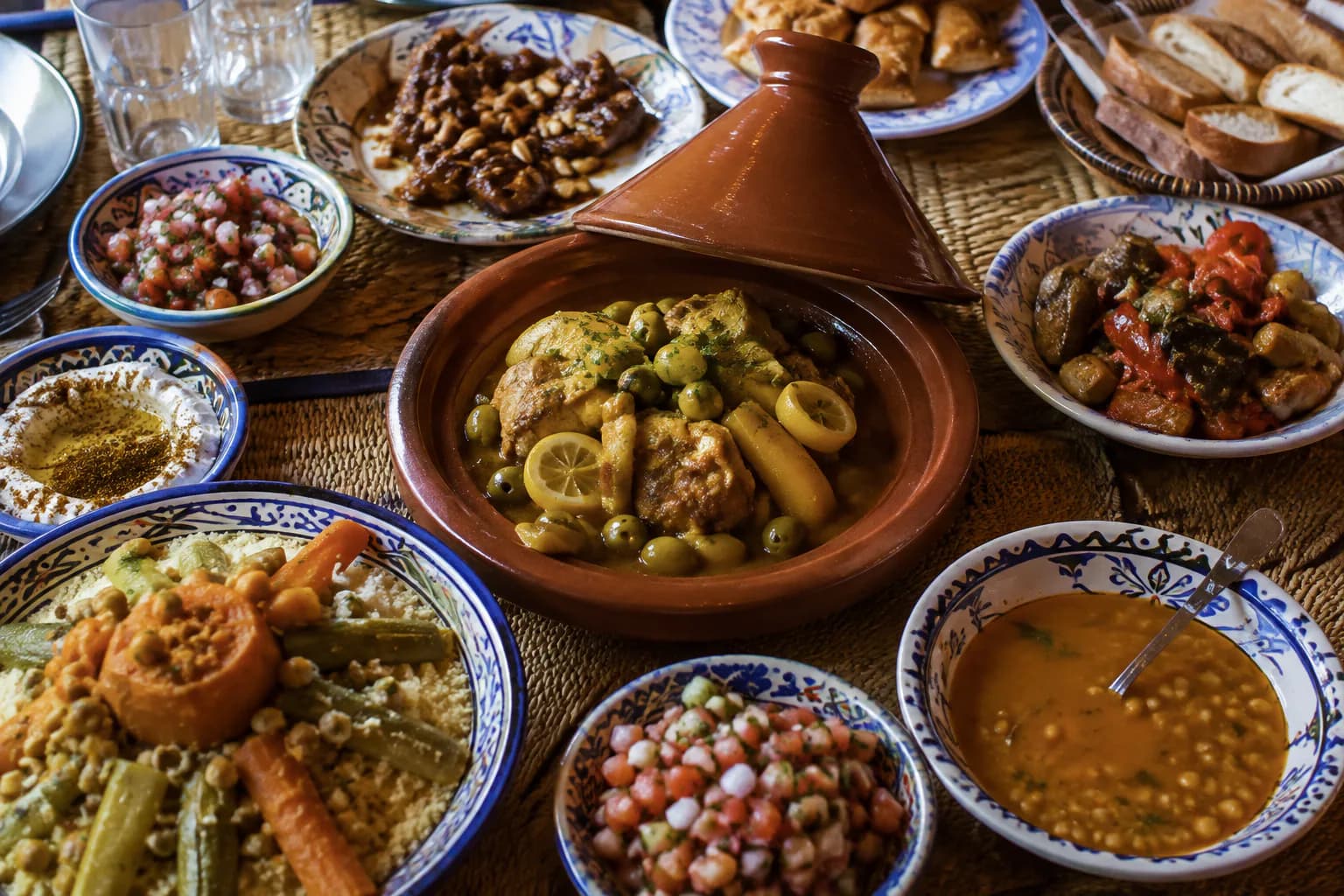
The version to look for is seba khodra, seven vegetables — carrot, turnip, courgette, pumpkin, chickpeas and whatever else is good that week, piled into a golden dome. Or couscous with tfaya, caramelised onions and raisins spooned over the top, which is sweet and savoury at once and is my mother's version.
Expect 60–100 MAD at a proper local place. Plan your Friday lunch around it. This is the single best piece of eating advice in this article.
2. Tanjia — the dish that belongs to Marrakech
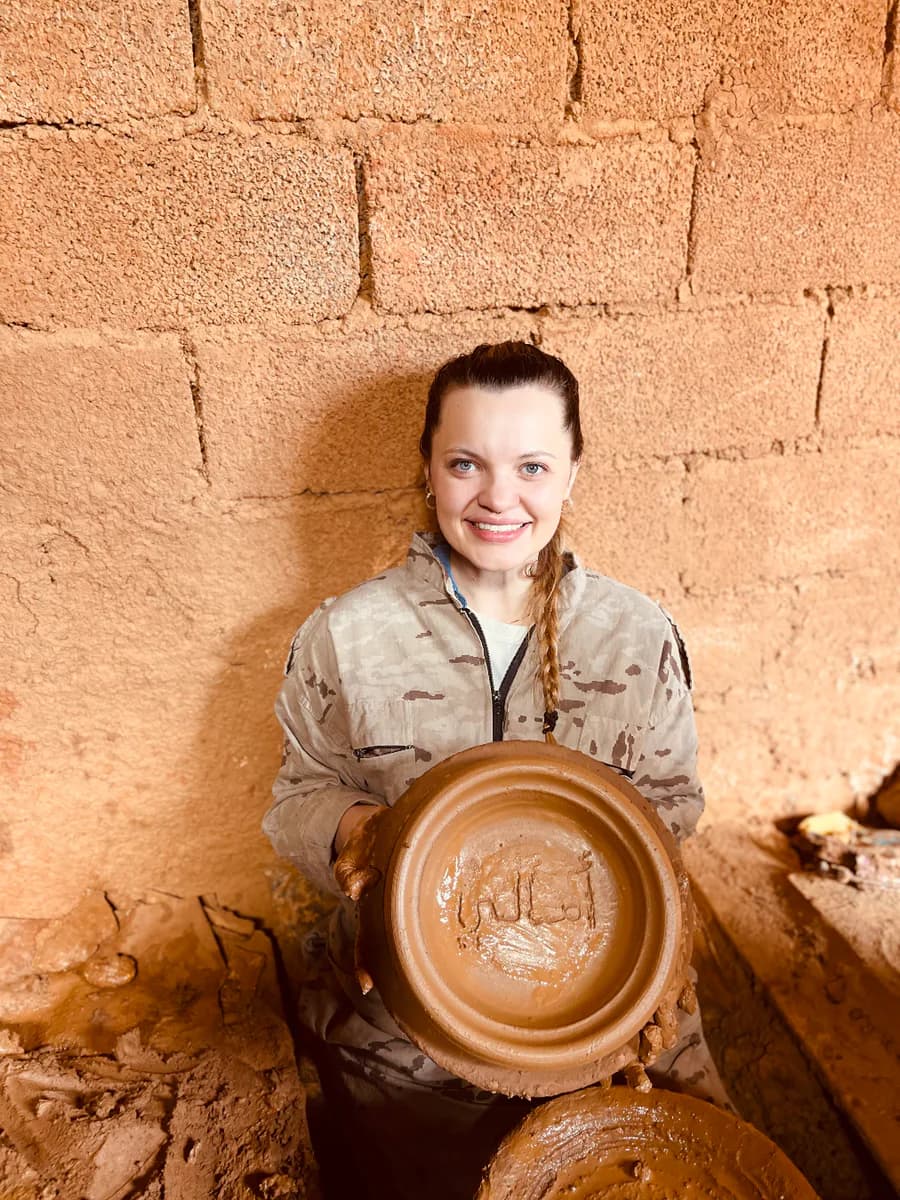
If you eat one thing here that you can't eat elsewhere, make it this.
Tanjia is lamb or beef packed into a tall clay urn with cumin, preserved lemon, garlic, smen and saffron, sealed, and buried in the warm ashes of a hammam furnace for six to eight hours. Not a stove. The actual furnace that heats the bathhouse.
It's traditionally a men's dish — the joke is that it's what bachelors cook, because it requires no skill beyond putting things in a pot and walking away — and it comes out so soft you eat it with bread and your fingers. Around 50–100 MAD.
Order it a day ahead. Anywhere producing an instant tanjia is producing something else and calling it that.
3. Tagine — and the thing everyone gets wrong
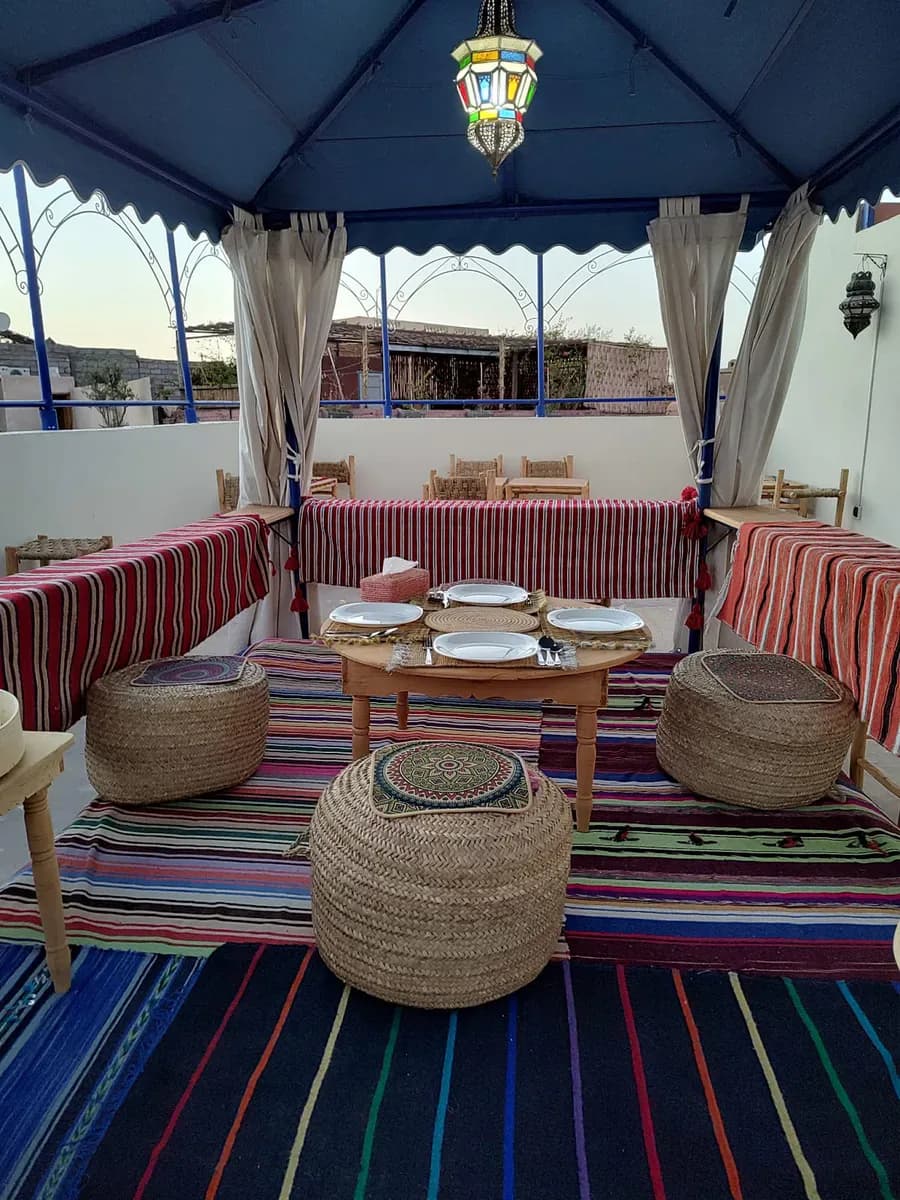
A tagine is both the conical clay pot and what you cook in it. You make a tagine in a tagine. Yes, I know.
The three you'll meet most: chicken with preserved lemon and olives (the elegant one), lamb with prunes and almonds (the sweet, celebratory one), and kefta — spiced meatballs in tomato sauce with eggs cracked in at the end, which is what I order when I'm hungry rather than curious.
If you want to learn how the dish actually comes together, Hands-On Moroccan Tagine Cooking Class is the sort of experience worth booking. 40–70 MAD at a local place, 80–130 in a nicer restaurant. And here's the tell: if your tagine arrives in under fifteen minutes, it did not come from that pot. It came from a tray in the back.
4. Harira — the soup that runs the country
Tomato, lentils, chickpeas, vermicelli, coriander, a squeeze of lemon. Ten to twenty dirhams a bowl and better than food that costs twenty times more.
It's what breaks the fast at sunset during Ramadan, served with dates on the side so the sweetness lands against the spice. But you'll find it year-round, all day, everywhere. Start every meal in Jemaa el-Fnaa with a bowl.
5. Bessara — breakfast, if you want to eat like a local
A thick soup of fava or split peas, poured into a bowl with a well of olive oil, a dusting of cumin and paprika, and bread for pushing it around. Five to ten dirhams.
Nobody puts bessara in a guidebook because it's not photogenic. It's beige. It is also exactly what you want at eight in the morning before walking the medina, and eating it standing up at a stall in Rahba Kedima is one of my favourite small pleasures in this city.
6. Msemen — flaky, square, endlessly correct
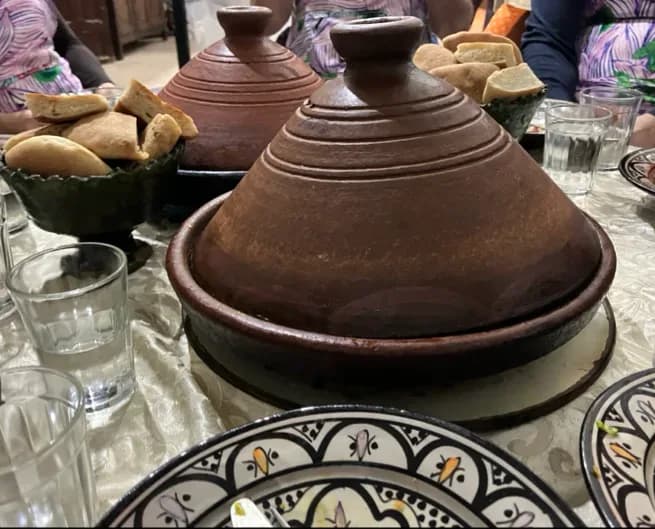
A laminated griddle bread, folded and folded again, fried until the layers separate. Three to ten dirhams. Sweet with honey or amlou (the argan-almond spread that ruins ordinary nut butter for you forever), or savoury with cheese.
Watch the woman making them. The folding is genuinely mesmerising and takes about four seconds once you know how, which I still don't, despite instruction.
Its cousins are worth knowing too: harcha, a semolina pan bread with a sandy crumb, and baghrir, the thousand-hole pancake that soaks up butter and honey like it was designed for it. It was.
7. Sfenj — doughnuts, but better
Fried rings of dough, one to four dirhams each, threaded onto a loop of palm frond to carry home. Not sweet in themselves — you dip them in sugar or honey or eat them with mint tea.
Morning and late afternoon are sfenj hours. And a small tip from my father, who took this extremely seriously: look at the oil. If it's dark, walk on. The good vendors change it through the day.
8. Maakouda — the potato fritter you'll keep going back for
Deep-fried mashed potato patties, spiced, five to eight dirhams. Get them tucked into bread with harissa, olives and a bit of salad and you have a sandwich for about ten dirhams that will keep you going until dinner.
This is the food of students, workers and anyone who has ever needed lunch quickly. Which is to say, everyone.
9. Brochettes — charcoal, smoke, and no cutlery
Skewers of lamb, beef, chicken or kefta, grilled over coals and served with bread, cumin and salt to dip into. Eight to fifteen dirhams a skewer.
Get merguez if you see it — spicy lamb sausage, usually in a crusty roll for ten to twenty dirhams, and greasy in the correct way.
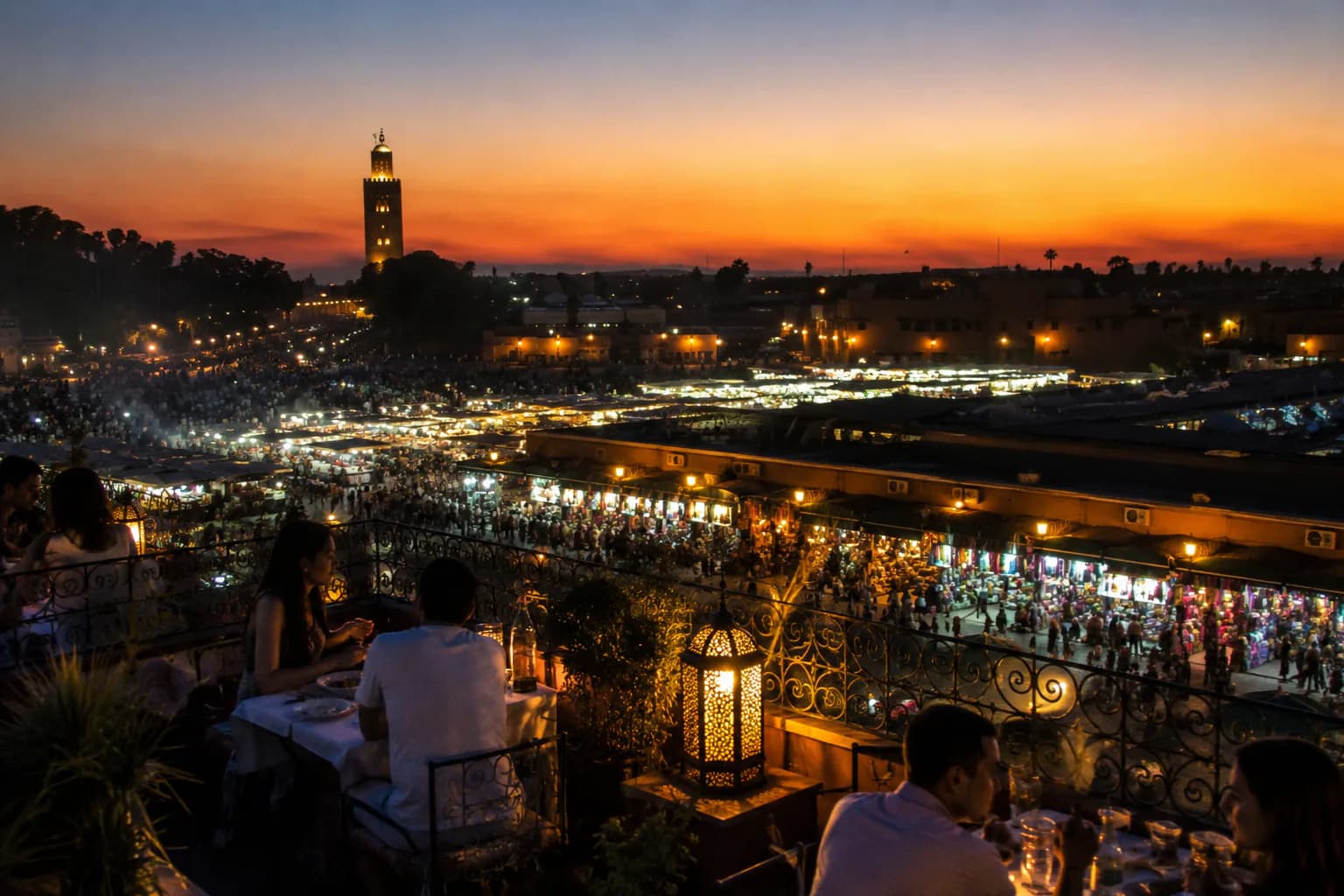
The stalls in Jemaa el-Fnaa are the classic setting. One firm rule there: agree the price before anything reaches your table, because bread and little dishes will appear before you've ordered and they are not free.
10. Mechoui — a whole lamb, in a hole in the ground
There's a short lane off the north end of Jemaa el-Fnaa where families lower whole lambs into clay pit ovens in the morning and pull them out at lunchtime.
You point at what you want, they carve it by weight, and hand it over with cumin, salt and bread. That's the entire transaction. It is spectacular and it is the reason to make lunch your big meal at least once.
Go at midday. When it's gone, it's gone.
11. Babbouche — yes, the snails
Snail soup, five to ten dirhams a cup, from carts that appear around dusk in Jemaa el-Fnaa. The broth has something like fifteen spices in it — anise, thyme, liquorice root, orange peel — and you fish the snails out with a pin and drink the liquid afterwards.
Moroccans drink it for sore throats and bad stomachs and general January misery. Foreigners drink it as a dare and then order a second cup. I have watched this happen many times and it never stops being funny.
12. Pastilla — the one that ends the meal, or starts the argument
Paper-thin warqa pastry wrapped around shredded pigeon or chicken, saffron eggs and toasted almonds, then dusted with icing sugar and cinnamon.
Sweet on savoury. It comes from Andalusian court cooking, takes most of a day to make properly, and appears at weddings and celebrations. Some visitors find the sugar-on-meat thing baffling for exactly one bite, and then it clicks.
And to drink
Mint tea, obviously — 10–15 dirhams at a local café, poured from a height because aerating it matters, and sweet enough to make your dentist wince. Fresh orange juice from the square, 5–10 dirhams. And if you spot the copper urns on the southern edge of Jemaa el-Fnaa, that's khoudenjal, hot spiced ginger tea with cinnamon and mace, sold by men who've stood in the same spot for decades. Almost nobody visiting tries it. Do.
Three rules that will never let you down
A local lunch crowd, food cooked in front of you, and no menu in five languages. That's the whole test. If a place meets those three, eat there.
Vegetarians, say bla lhem — "without meat." Zaalouk (smoky aubergine), taktouka (peppers and tomato), bessara, lentils, vegetable tagine and bread with amlou are all easy to find. Just check that the couscous isn't made with meat stock, because sometimes it is.
You can eat superbly here for very little. Street food all day comes to well under 150 dirhams. Save the money for one proper riad dinner and spend the rest of your meals on plastic stools, which is where the good stuff is anyway.
If you do only one thing from this list, make it Friday couscous. Find a small place with families in it, order the seven vegetables, and take your time.
That's the smell of my whole childhood, and it's the closest thing Morocco has to a national hug.