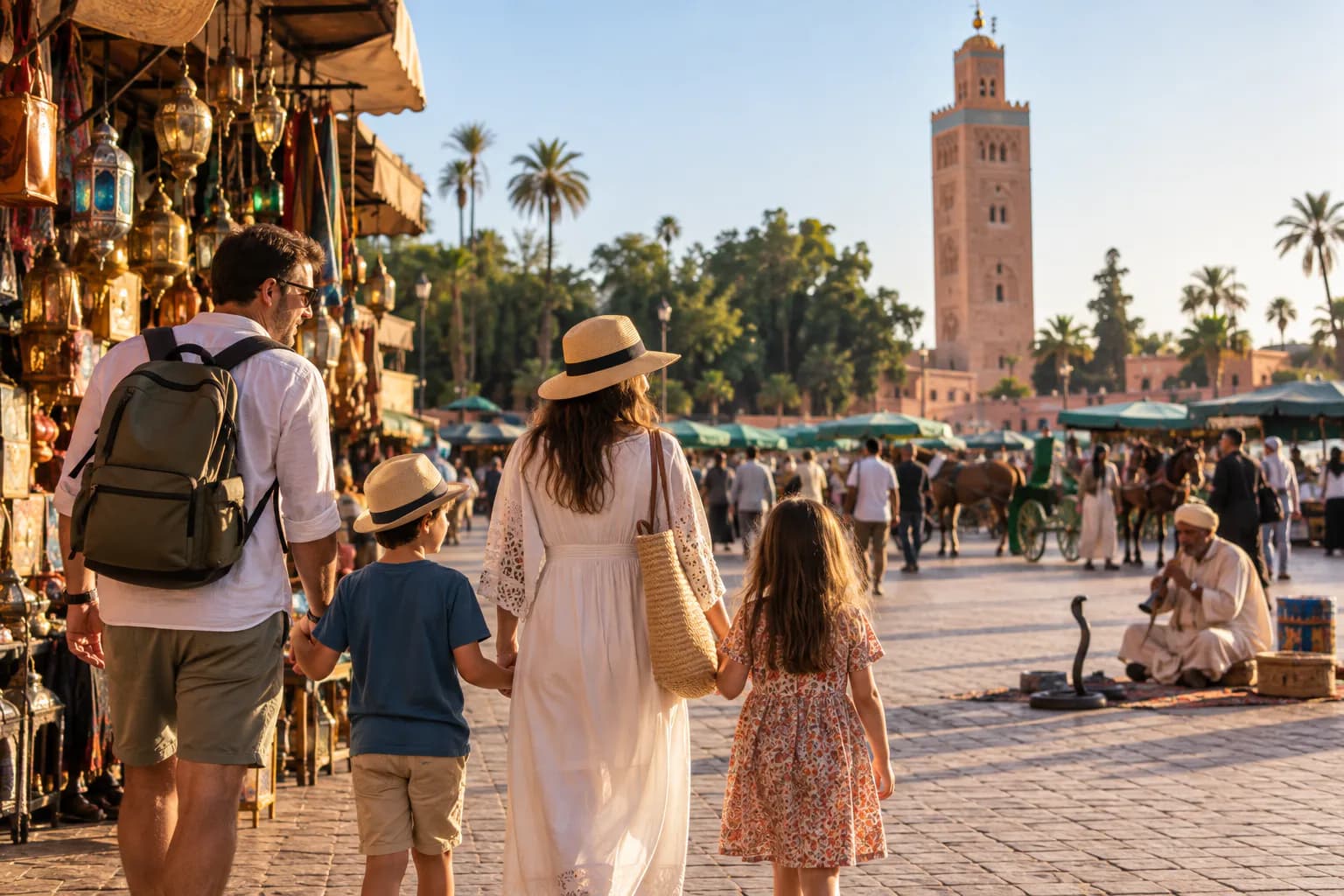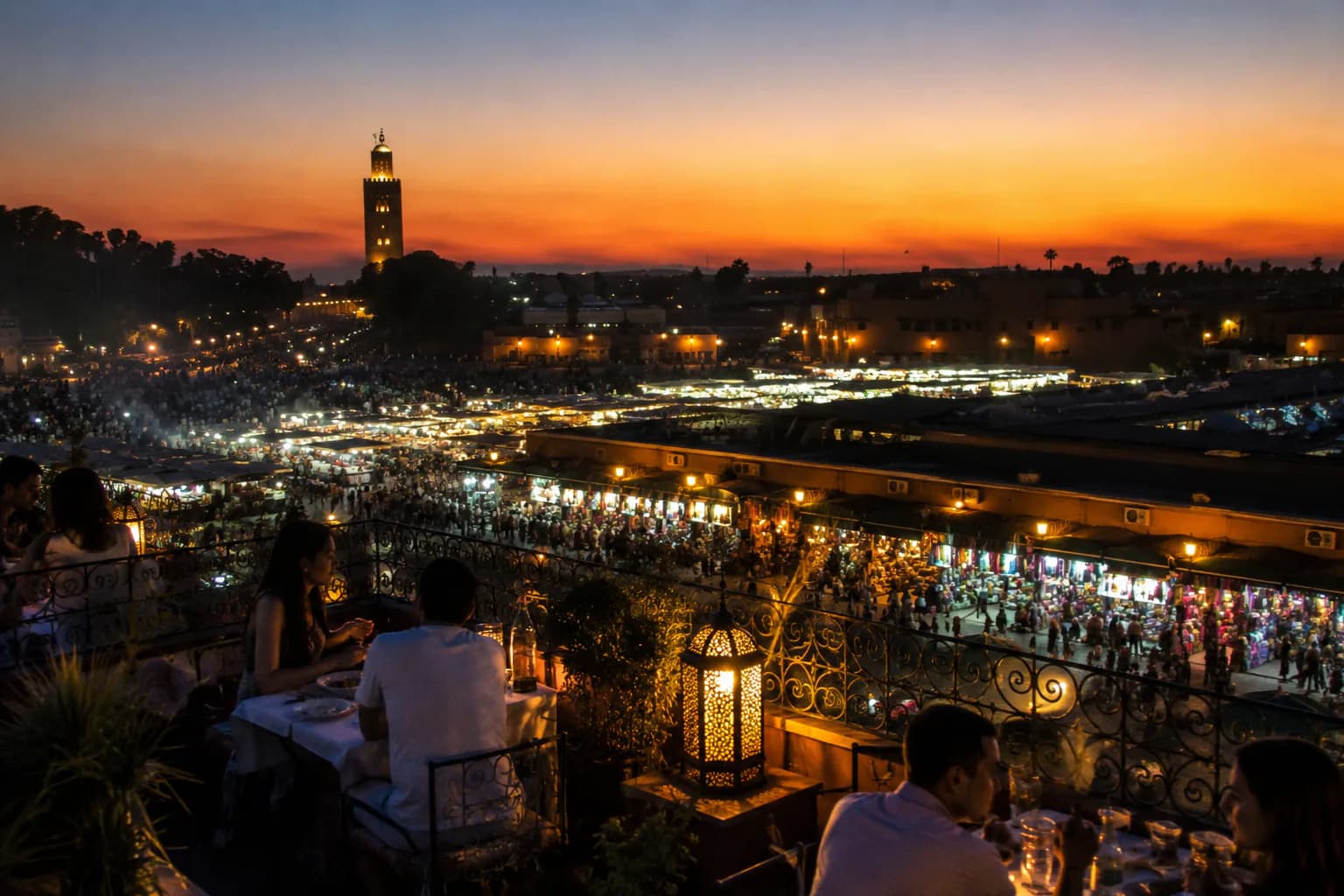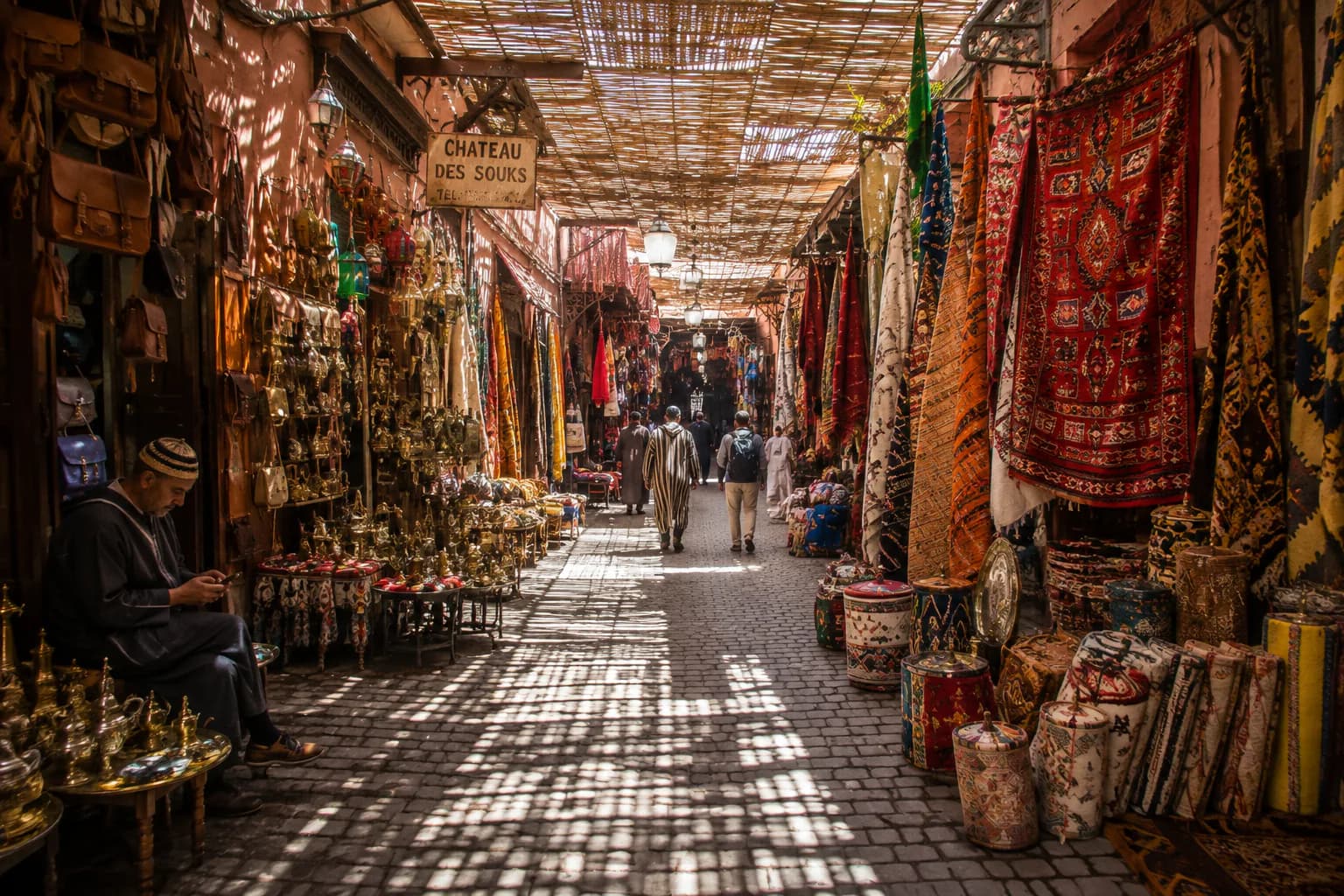
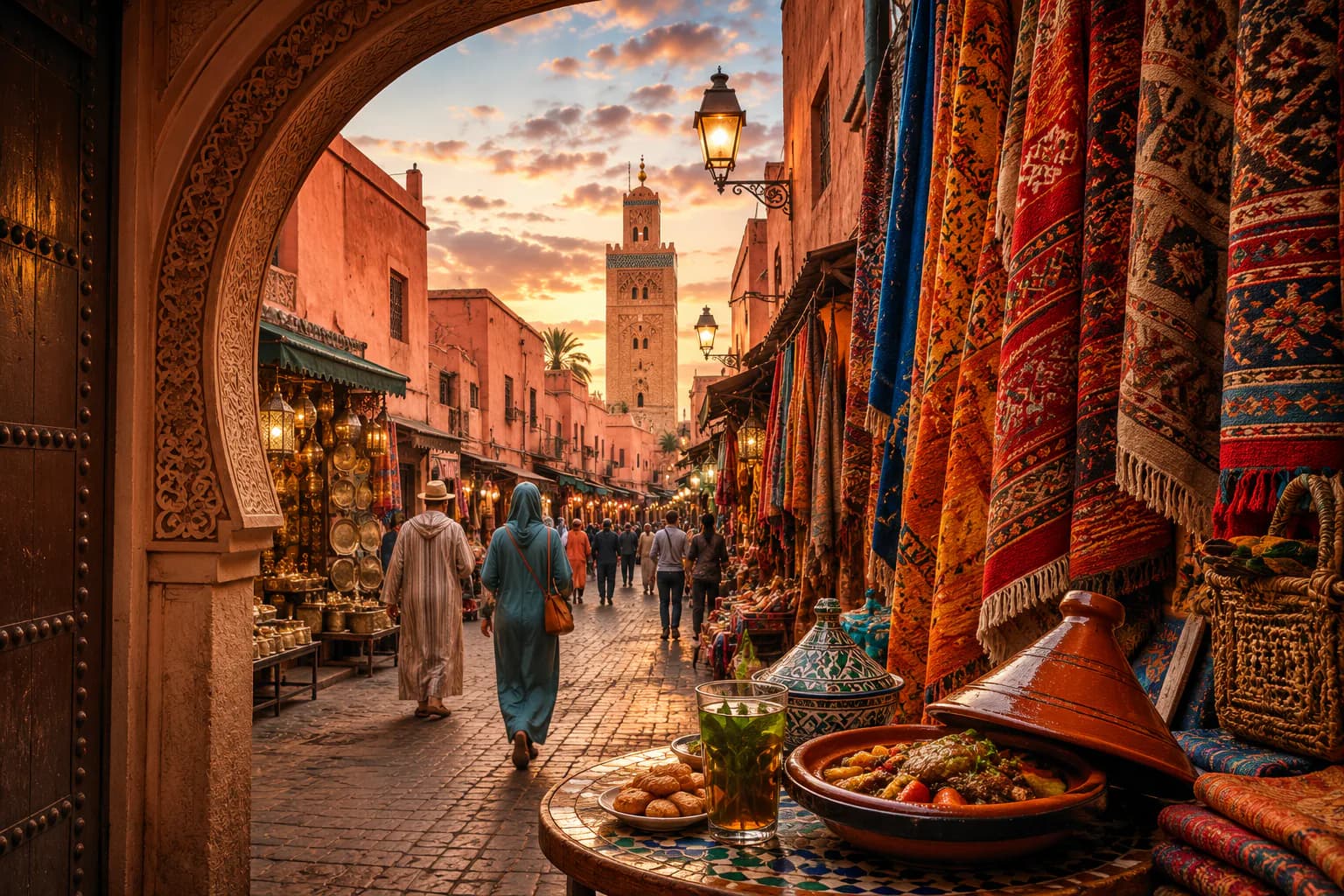
Most people "do" the Marrakech medina in about four hours. They walk from Jemaa el-Fnaa into the souks, get lost, buy a lamp they will later have complicated feelings about, and emerge somewhere near the Koutoubia feeling slightly overstimulated and mildly ripped off.
Here's the thing: the souks are maybe a tenth of the medina. The rest — the other ninety percent inside those 12th-century walls — is where 100,000-odd people actually live, cook, argue and get their bread baked. That's the part worth your time.
Learn the five-thing rule and the walls stop being a maze
The medina isn't random. It's divided into quarters, and the ones you'll actually meet are Mouassine, Rahba Kedima, Dar el Bacha, Riad Zitoun, the Mellah, the Kasbah and Bab Doukkala.
Each quarter was built around five things: a mosque, a communal bread oven, a hammam, a fountain and a shop selling the basics — everything a household needed within a two-minute walk. All five are still there. Still working.
Once you know that, you can read the medina. You'll notice when the shops switch from brass lanterns to plastic buckets and school notebooks, and realise you've crossed a boundary. Google Maps, meanwhile, will confidently walk you into a wall. Use it for general direction and your eyes for everything else.
Getting lost isn't a risk here. It's the itinerary.
The buildings actually worth paying for
Monument entries run roughly €5–10 each, cash only, no cards, and there's no combined ticket — so pick three or four rather than trying to collect them all like Pokémon.
Ben Youssef Madrasa (50 MAD, daily 9am–7pm) is the one. A 16th-century Islamic college that housed up to 900 students and stayed in use until 1960. The courtyard zellige is the best tilework in the city, and it's one of the few religious buildings in Morocco fully open to non-Muslims. Go at 9am, before the light and the crowds both go flat.
Bahia Palace (around 70–100 MAD) is a maze of rooms where you have to poke your head around every corner to be sure you've seen it all. Orange trees, painted cedar ceilings, an hour at a leisurely pace.
El Badi Palace (100 MAD) is a ruin, and gloriously so. Sultan Ahmed al-Mansour built something extravagant in the 16th century; a later sultan, Moulay Ismail, stripped it to the bones and carted the good bits off to Meknes. What's left is a vast empty courtyard, sunken gardens, and storks nesting on the walls like they own the freehold.
The Saadian Tombs (100 MAD, 9am to 5pm) hold about sixty graves and were sealed and largely forgotten until 1917. Small, crowded, and worth it for the marble and stucco in the main chamber. Everyone lowers their voice on entry without being told to.
Dar el Bacha (70 MAD, closed Mondays) was built in 1910 for Thami El Glaoui, the pasha who ran Marrakech like a personal fiefdom. It's now the Museum of Confluences, and it has the best café attached to any monument in the city.
Maison de la Photographie (80 MAD, daily 9:30am–7pm) is the sleeper hit — a century of Moroccan photographs in an old merchant's house, plus a rooftop with an Atlas view.
The Almoravid Koubba is the oldest building in Marrakech, 12th century, and roughly the size of a large garden shed. It survived because the Almohads demolished nearly everything else their predecessors built and somehow missed this one. Five minutes, and a small thrill.
The half of the medina nobody visits
The Mellah, the old Jewish quarter, was established in 1558 and reads unlike anywhere else in the old city: the streets run straighter, the houses are taller, and the balconies face outward instead of onto a courtyard. Enter at Place des Ferblantiers — you'll hear the tinsmiths before you see the gate. The Lazama Synagogue costs about 10 MAD, and the Miaara cemetery nearby is the largest Jewish cemetery in Morocco. Almost nobody from the original community remains; what's left is architecture, and it's quietly moving. The spice and gold market here also runs 20–30% cheaper than the tourist souks up north. Keep the camera mostly away — this is a residential neighbourhood, not an exhibit.
Fondouks are the medina's best free attraction. These were caravanserais: courtyard inns where visiting merchants stabled animals downstairs and slept upstairs. Several around Rue Dar el Bacha and Rue Mouassine still welcome visitors, and many now house working artisans. You push open an unmarked door and find a 400-year-old courtyard with a man making babouches in it. Nobody charges you. Nobody is trying to sell you a rug. It's the single most underrated thing in Marrakech.
What to eat, and the rule that never fails
The rule: a local lunch crowd, food cooked in front of you, and no menu in five languages. That's it. That's the whole rule.
Tanjia is the reason to eat in Marrakech specifically. Meat packed into a clay urn with cumin, preserved lemon, garlic and saffron, then left in the ashes of a hammam furnace for six to eight hours until it collapses. It's the city's own dish — you won't find it done properly in Fes or Tangier. Order it a day ahead; anywhere serving instant tanjia is serving you something else.
Mechoui Alley, off the north end of Jemaa el-Fnaa, is where whole lambs come out of clay pit ovens. You point, they carve by weight, you get cumin, salt and bread. Go at lunch, when it's hot.
Friday is couscous day. Not a marketing line — an actual communal family meal after Friday prayers, seven vegetables, lamb or chicken, cold buttermilk on the side. Tourist restaurants serve couscous daily. Plan your Friday lunch around the real one.
Rahba Kedima, the spice square, is the breakfast move: msemen (flaky griddle bread) or a bowl of bessara (fava bean soup) from a stall, standing up, for coins.
Rough costs: harira 10–20 MAD, a proper tagine 50–100 MAD, a riad set menu 150–300 MAD. If your tagine arrives in under fifteen minutes, it was made yesterday.
Two experiences worth booking
A hammam. Not the spa version — those run €15–30 and are perfectly nice, but the neighbourhood hammam is the actual cultural artefact. Expect around 150 MAD for a scrub and 100 MAD for a massage, plus a stranger scrubbing off a layer of you with silent professional efficiency while you lie on a mat wondering what your life has become. You will leave approximately one shade lighter and weirdly euphoric.
A cooking class. From about $30 to $50 for a half day, usually starting with a market trip and ending on a rooftop eating what you made. It's the fastest way to understand why Moroccan food tastes the way it does, and you'll never buy supermarket ras el hanout again. The Hands-On Moroccan Tagine Cooking Class is a natural fit if you want to book one.
What to be sensible about
The tanneries at Bab Debbagh. The main cooperative is free to enter, but you'll be met by a "guardian" who says otherwise, and by young men who'll follow you from the souks and demand a fee for coming in with you. A 10–20 MAD tip, a firm no, and no eye contact is the standard play. Also: mint sprig or not, it smells like a chemistry accident.
Faux guides. The classic openers are "the souk is closed today," "there's a Berber market only on Tuesdays," and "the tanneries are that way." All roads lead to a cousin's carpet shop. Licensed guides carry a government badge — ask to see it.
Photographs of people. Ask first. La bas? with a gesture at the camera does the job, and a refusal is a refusal.
A half day that actually works
Start at Ben Youssef at 9am. Almoravid Koubba next door for five minutes. Wander south into the fondouks around Mouassine, push open two or three doors. Maison de la Photographie for the rooftop. Lunch in Mechoui Alley. Cross to the Mellah in the afternoon when the northern souks are at their worst, and finish at El Badi among the storks as the light goes orange.
Four monuments, one lamb, zero lamps you'll regret.
The bottom line
Buy the lamp if you want the lamp. But give the medina one full day where you don't shop at all — where you just push open unmarked doors, eat standing up, and let yourself get properly, hopelessly lost.
The souks are the shop window. The medina is the house.