Three days is exactly the right amount of time for Marrakech. Two and you spend the whole trip slightly panicked. Four and you start having opinions about which orange juice cart is best, which is a sign you should either go home or move here permanently.
The trap most first-timers fall into is trying to see everything. Marrakech punishes that. The medina is hot, loud and disorienting by design, and a day of six monuments will leave you remembering none of them. So this itinerary does one dense medina day, one monument-and-garden day, and one day out of the city — with real prices, real opening hours, and permission to skip things.
Day 1 — Medina | Day 2 — Palaces & gardens | Day 3 — Out of the city | |
|---|---|---|---|
Morning | Land, drop bags, get lost on purpose | Jardin Majorelle, 8:30am slot | Drive to Agafay or the Atlas |
Midday | Koutoubia, lunch in Mechoui Alley | Bahia Palace, then lunch in the Mellah | Lunch with a view; camel or quad |
Afternoon | Ben Youssef Madrasa + Almoravid Koubba | El Badi Palace and the Saadian Tombs | Head back to the city |
Sunset | Rooftop above Jemaa el-Fnaa | Hammam | One last rooftop |
Evening | Down into the food stalls | Early dinner, early night | Souk run for anything you didn't buy |
Before you go: two decisions that matter
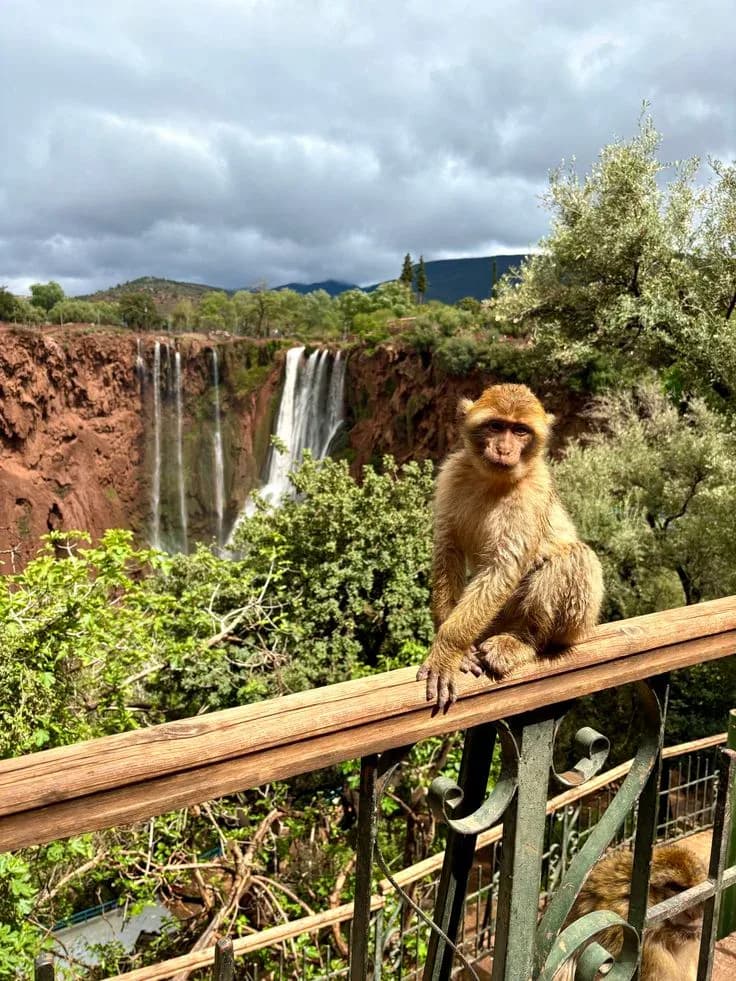
Stay in a riad inside the medina. Not in Gueliz, not at a resort on the Palmeraie road. The medina is where everything on this list is, and walking out of a carved wooden door into a 900-year-old alley every morning is half of what you came for. The trade-off is real: taxis can't reach most riad doors, so you'll walk the last five minutes with your suitcase. Get your riad's GPS pin in advance and ask them to send someone to meet you at the nearest gate. Most will, happily, for free.
Getting in from the airport. Menara is only about 6 km from Jemaa el-Fnaa, a 15–25 minute drive. What you pay for that ride is one of the most contested numbers in Moroccan travel:
A metered petit taxi should be 50–80 MAD in daylight, though meters are frequently "broken" and the commonly quoted airport flat rate sits at 70–150 MAD. After 22:00 a legitimate 50% night tariff applies, taking it to roughly 100–240 MAD — that one is real, not a scam. Bus line 19 costs 30 MAD but doesn't run late. A pre-booked private transfer is €15–30 per car, fixed, with the driver waiting in arrivals.
Sources genuinely disagree here, mostly because "the city centre" means Gueliz to one writer and a riad deep in the medina to another. The useful rule: a 6 km ride should not cost more than 150 MAD in any scenario, and if you're landing after a long flight with luggage, the €15 transfer buys you a calm arrival. Agree the fare before the boot closes. Doing it afterwards never goes well.
Bring cash. Small notes. Almost nothing in the medina takes a card.
Day 1 — The medina, on its own terms

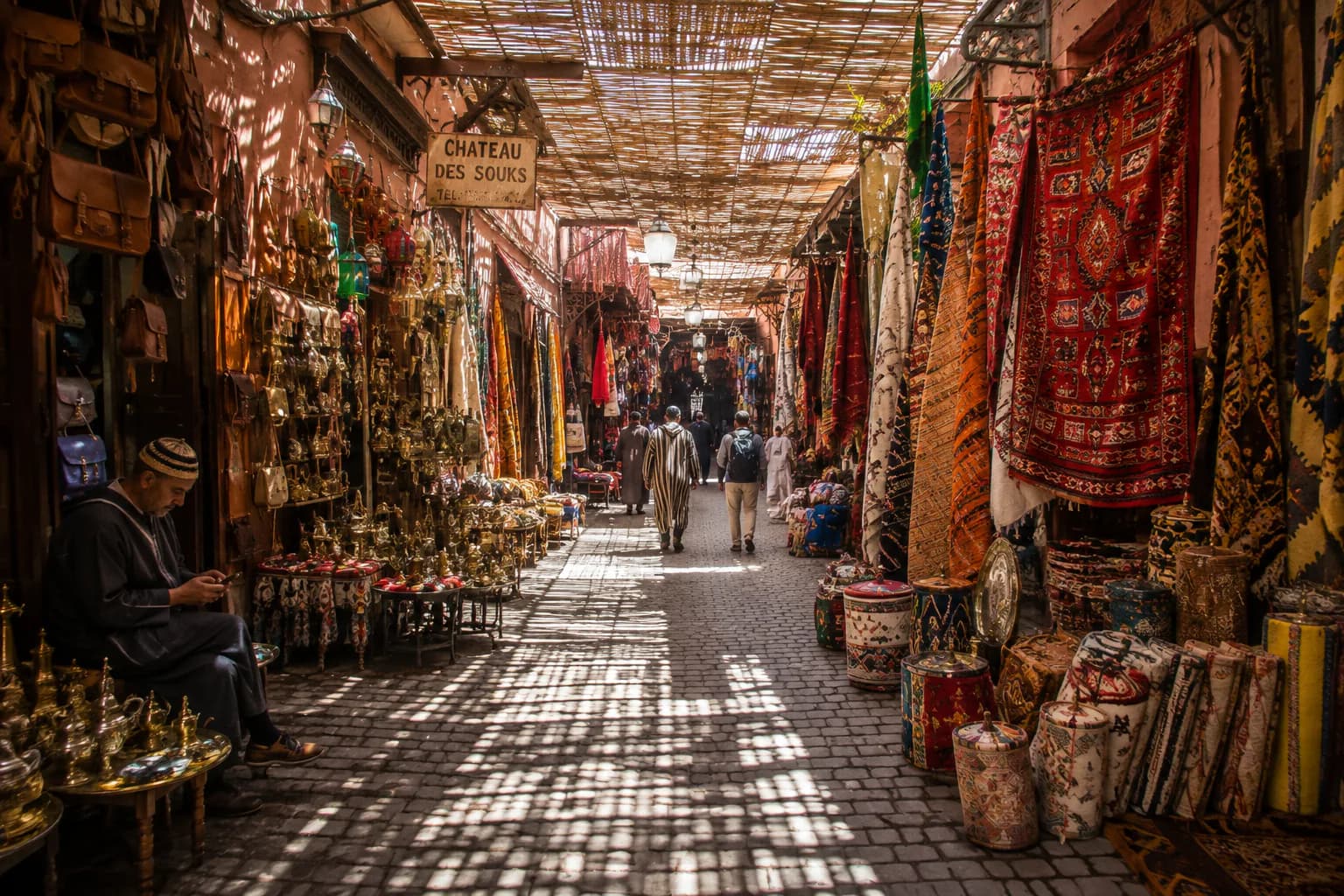
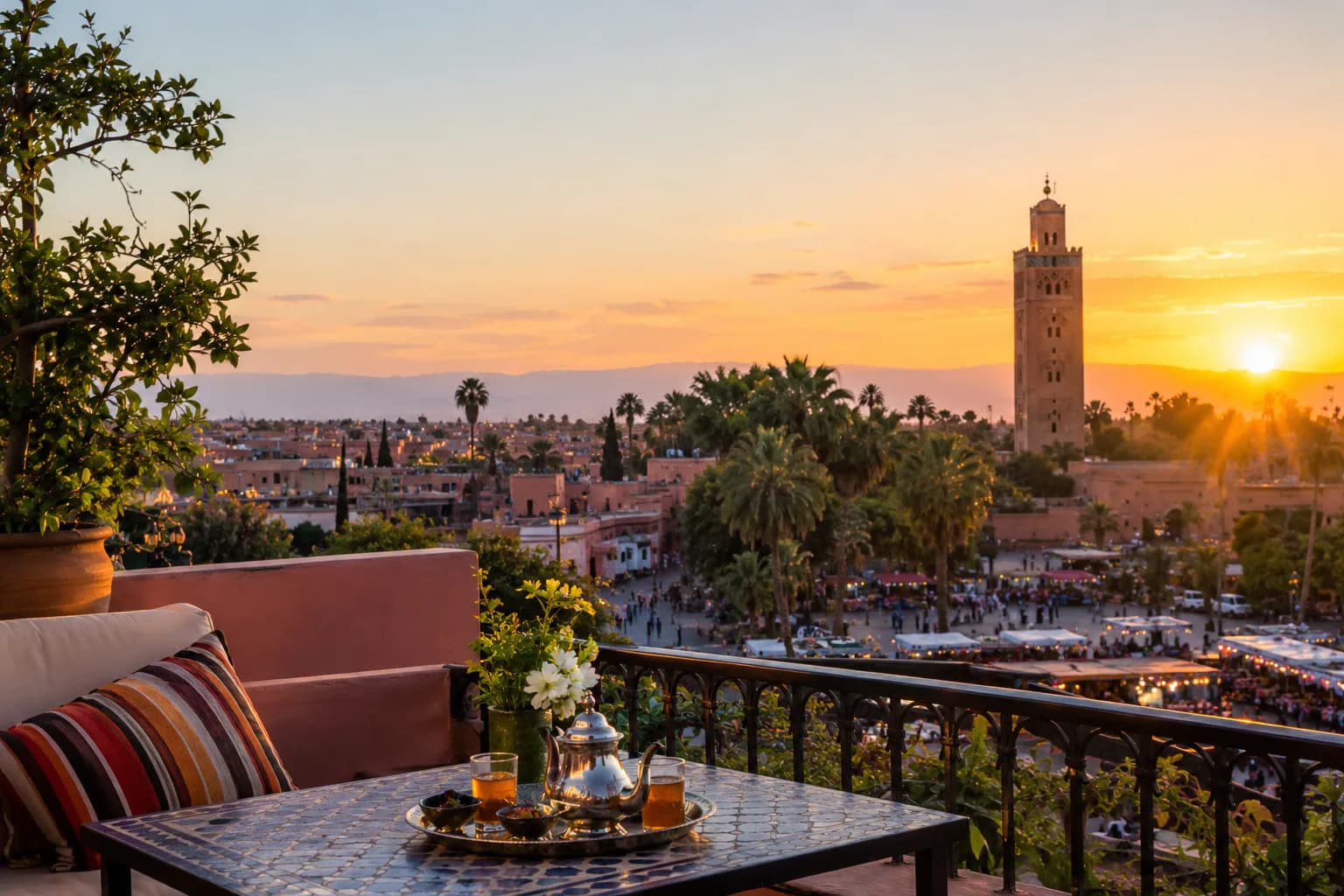
Morning: arrive and get lost on purpose. Drop your bags, take a mint tea on your riad's roof, and then go for a walk with no destination. Yes, really. You'll be disoriented for the first two hours no matter what you do, so spend that time deliberately rather than fighting it while late for a monument. Google Maps will confidently walk you into a wall. Trust your eyes and the direction of foot traffic. For a gentler introduction, Marrakech Medina, Souks & Stories with a Local Guide fits naturally here.
The one thing worth knowing: each quarter of the medina was built around five things — a mosque, a communal bread oven, a hammam, a fountain and a shop selling the basics, all within a two-minute walk. They're all still there and still working. Once you spot them, the maze starts making sense.
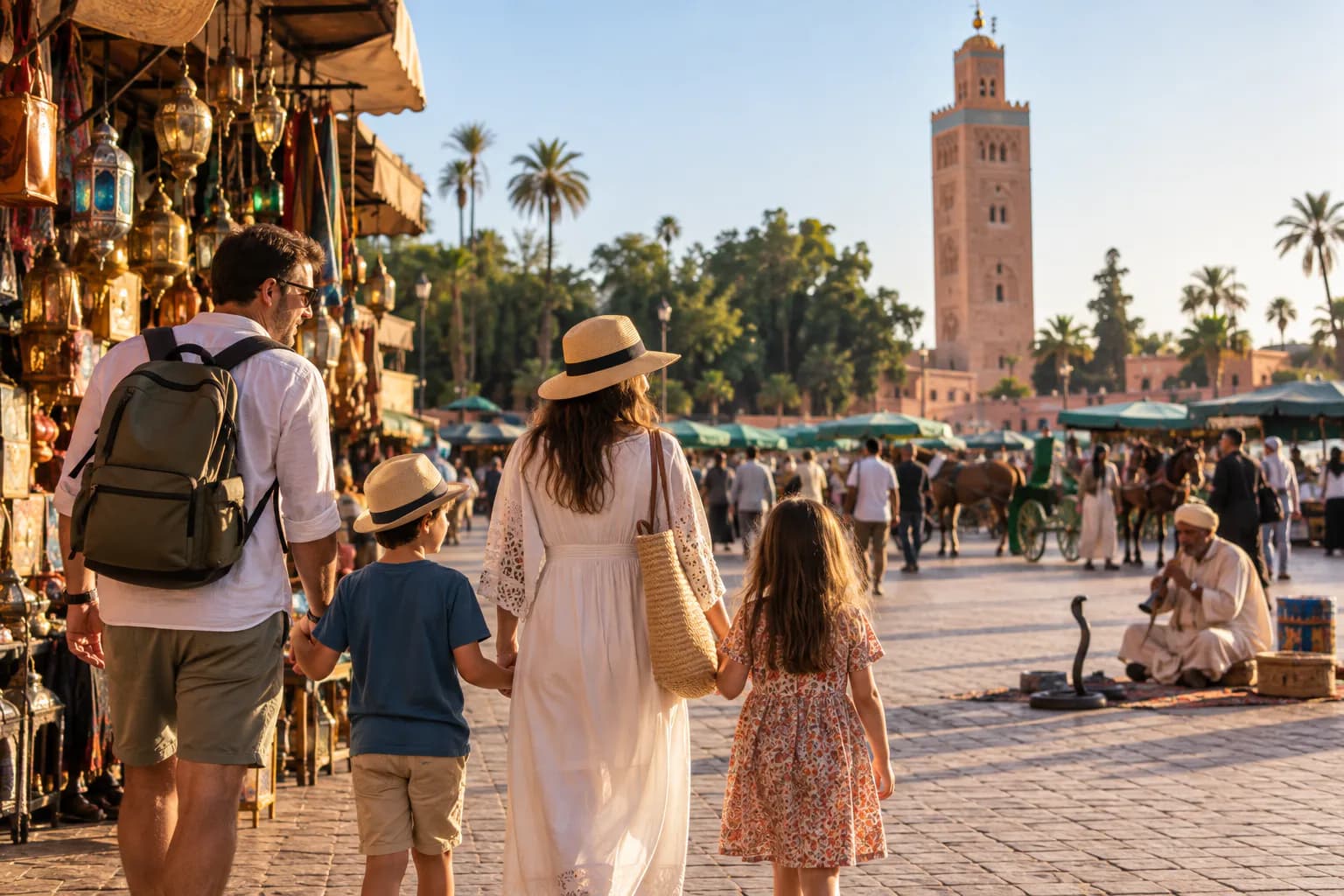
Midday: Koutoubia, then lunch in Mechoui Alley. The Koutoubia minaret is your compass for the whole trip — 77 metres, visible from almost everywhere, and the building every other minaret in the region was copied from. Non-Muslims can't go in, but the gardens are lovely and free.
Then walk to Mechoui Alley, a short lane off the north end of Jemaa el-Fnaa, where family shops pull whole lambs out of clay pit ovens. You point, they carve by weight, you get cumin, salt and bread. Go at lunch when it's hot. This will be one of your three best meals.
Afternoon: Ben Youssef Madrasa. 50 MAD, open daily 9am–7pm. A 16th-century Islamic college that housed up to 900 students and stayed in use until 1960. The courtyard tilework is the best in the city, and it's one of very few religious buildings in Morocco fully open to non-Muslims. The Almoravid Koubba is next door — 12th century, the oldest building in Marrakech, and roughly the size of a large garden shed. Five minutes, small thrill.
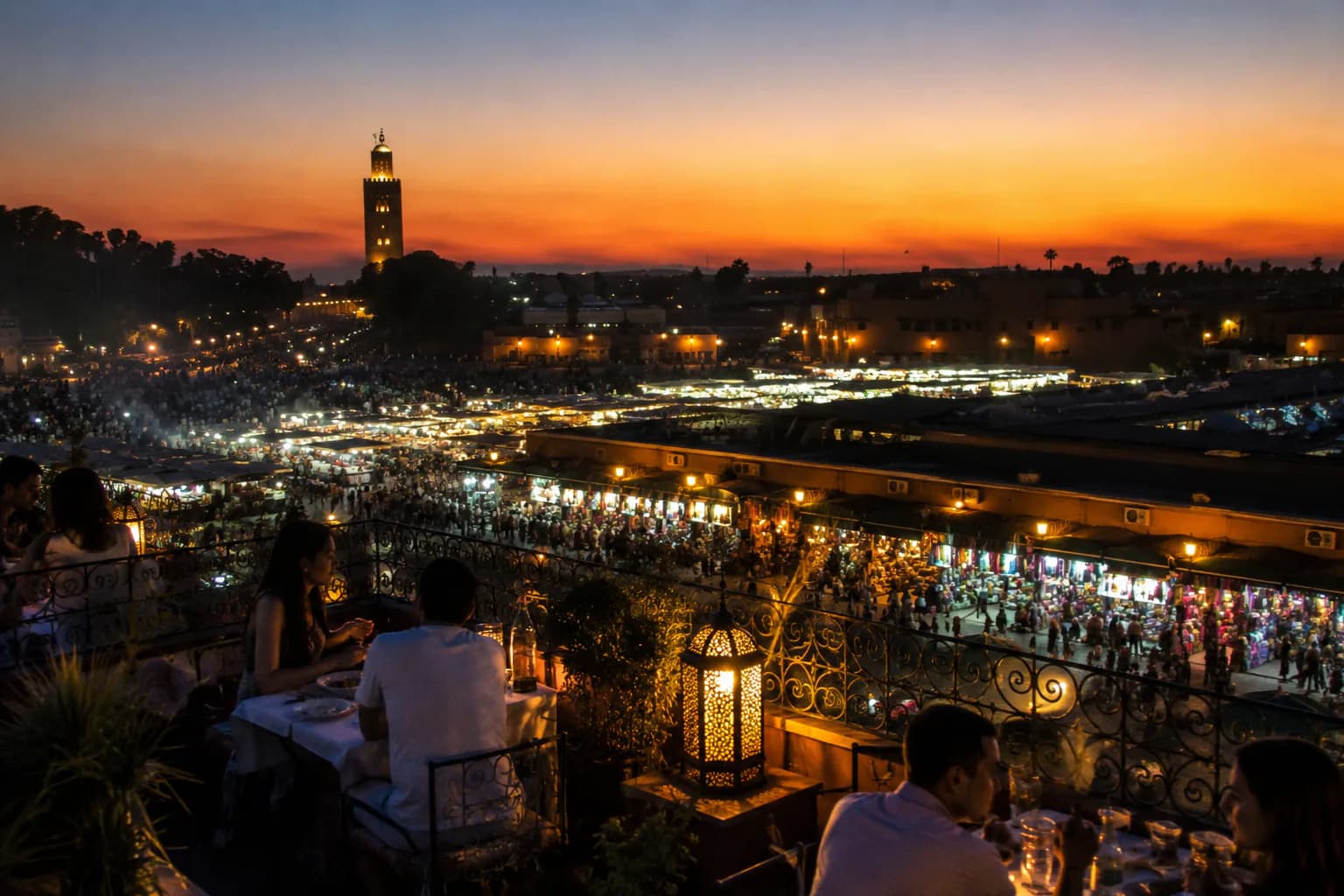
Sunset: go up. Take a terrace above Jemaa el-Fnaa — Le Grand Balcon du Café Glacier or Café de France — around 5pm and watch the square build itself from nothing. Handcarts arrive, trestle tables go up, and by 6:30 there are over a hundred stalls seating thousands where an hour earlier there was bare ground. Expect a cover charge around 25 MAD including a drink. You're buying the view, not the tea.
Evening: down into it. Then go eat in the square. Harira soup 10–20 MAD, brochettes 5–10 MAD each, a full grill plate 40–80 MAD. One rule: agree the price before anything touches the table. Bread and little dishes will appear before you order — they are not free.
Day 2 — Palaces, gardens and a hammam
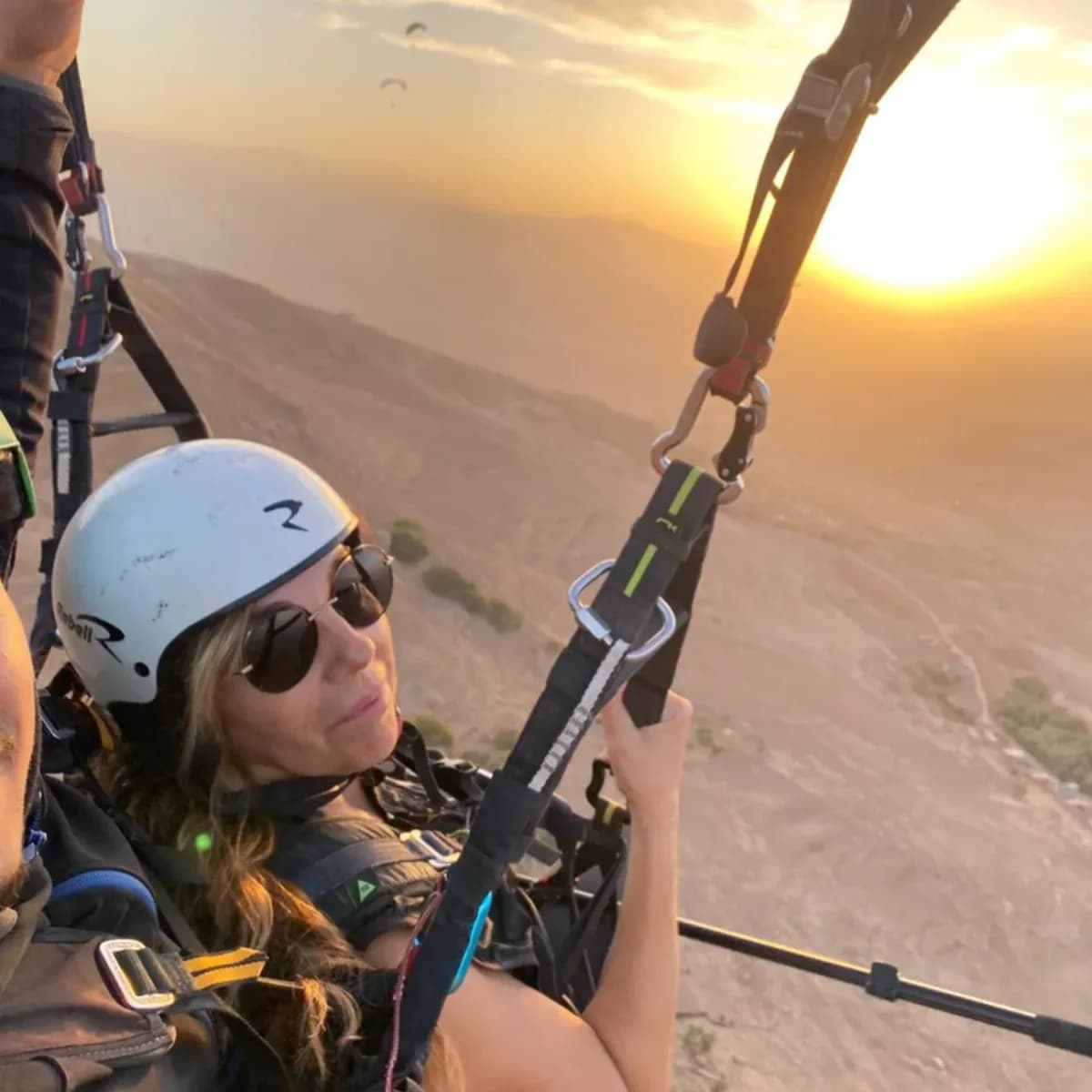
8:30am: Jardin Majorelle. Book online in advance from the official site; walk-ups queue. Entry is around 170 MAD for the garden, plus roughly 60 MAD for the Berber Museum and 140 MAD for the Yves Saint Laurent Museum next door. It opens at 8am and the first hour is the only hour it isn't full of people photographing the same blue wall. Two hours covers all three.
Honest note: some visitors find it overpriced and over-crowded for a small garden with a fixed one-way route. If you're travelling on a budget, Le Jardin Secret in the medina is cheaper, quieter and arguably more atmospheric.
Late morning: Bahia Palace. Roughly 70–100 MAD depending on which sign you read — the price rose recently and half the internet hasn't caught up. It's a maze of rooms where you need to look around every corner to be sure you've seen it all. Orange trees, painted cedar ceilings, about an hour at a leisurely pace.
Lunch: the Mellah. The old Jewish quarter, established in 1558, sits right next door and almost nobody walks into it. The streets run straighter, the houses are taller, and balconies face outward instead of onto a courtyard. Enter at Place des Ferblantiers — you'll hear the tinsmiths before you see the gate. The Lazama Synagogue is about 10 MAD. The spice and gold market here runs 20–30% cheaper than the tourist souks, and lunch is better and half the price.
Afternoon: El Badi and the Saadian Tombs. El Badi (100 MAD) is a magnificent ruin — a 16th-century palace that a later sultan stripped to the bones and carted off to Meknes. What's left is a vast empty courtyard with storks nesting on the walls like they hold the freehold. The Saadian Tombs (100 MAD, 9am–5pm) are five minutes away: sixty graves, sealed and largely forgotten until 1917, and the finest small room in Marrakech. Everyone lowers their voice on the way in without being asked to.
Evening: hammam. The single most underrated thing you can do here. Spa versions run €15–30; a neighbourhood hammam is more like 150 MAD for a scrub and 100 MAD for a massage, and is the actual cultural artefact. You will lie on a mat while a silent professional removes a layer of you, wonder briefly what your life has become, and emerge one shade lighter and strangely euphoric. The Traditional Moroccan Hammam & Massage Experience is a bookable option if you prefer a serene setting. Eat early afterwards. You'll be asleep by ten.
Day 3 — Get out of the city
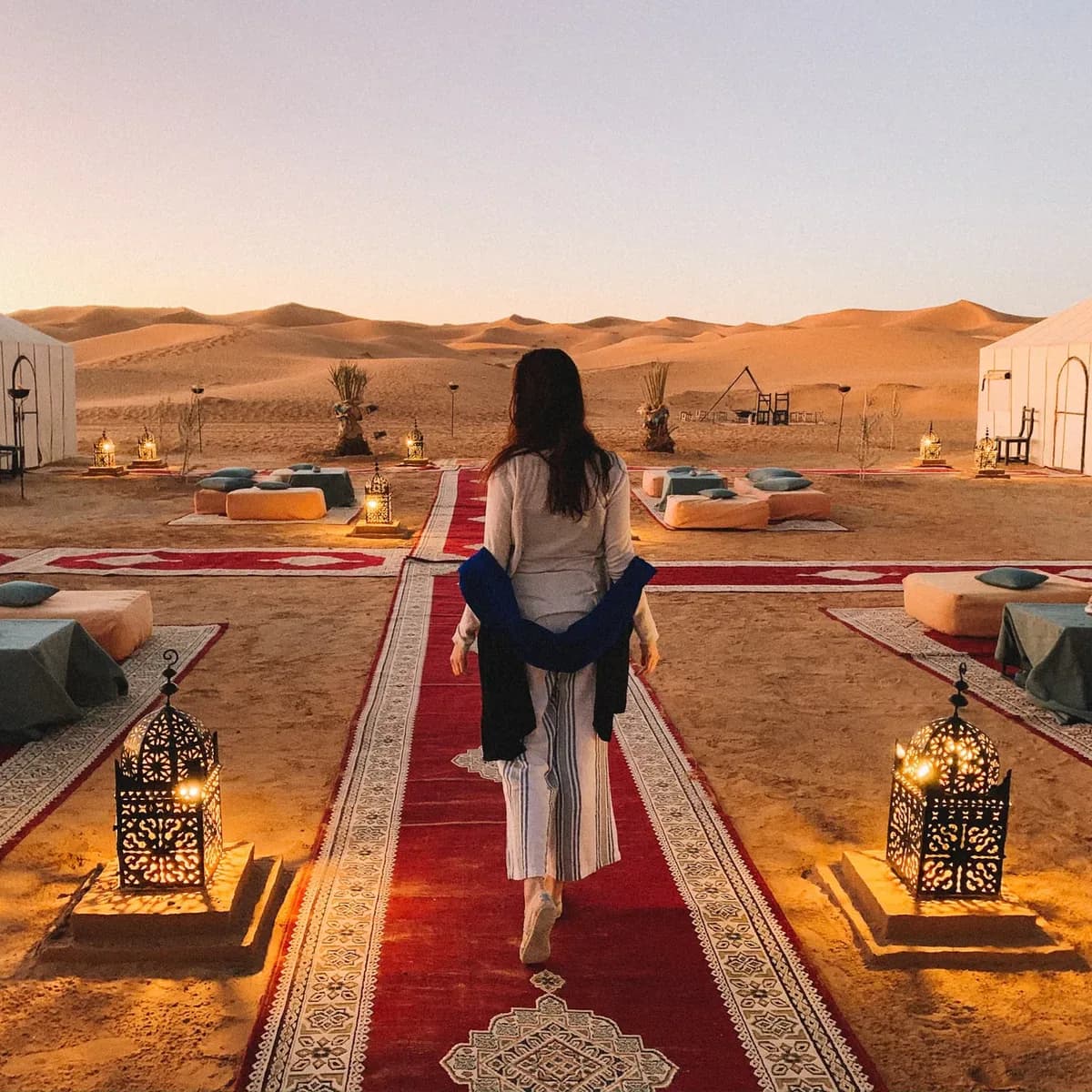
Three days in Marrakech works best when one of them isn't in Marrakech.
Option A — Agafay (easiest). A rocky plateau 40 km south, about 45 minutes away. Quad biking runs roughly €35 for an hour, and a sunset camel ride with dinner and music from about €23–35 for a shared trip. Be clear-eyed about it: Agafay is not the Sahara and has no sand dunes. It's a beautiful lunar plateau with the Atlas behind it. People who arrive expecting dunes leave disappointed; people who arrive expecting dinner under enormous sky have a wonderful night. The Moroccan Desert Quad Adventure is a natural fit for the quad-bike part of the day.
Option B — The Atlas foothills. The Ourika Valley or Imlil, about 1–1.5 hours out. Green, cool, running water, walnut trees, and a genuinely different Morocco. Best in spring when the snowmelt is running. The Mountain Waterfalls ourika valley with guide tour adds a scenic waterfall, flowing streams, riverside terraces and a traditional tagine.
Option C — Sunrise balloon. From about €150–170 per person, floating over the Jbilet hills at first light with breakfast after. Weather-dependent, and the pickup is horribly early. Also unforgettable. Hot-Air Balloon Flight Over Marrakech is the bookable version.
What not to do: don't try to reach the actual Sahara. Merzouga is 560 km away — nine to ten hours each way — and a "2-day desert tour" from Marrakech is roughly twenty hours in a van in exchange for one hour of sand. Save it for a longer trip.
Come back for one final rooftop, and buy the lamp. You know the one.
When to come
The numbers, roughly: highs climb from 19°C in January to 23°C in March, 25°C in April and 28°C in May, then spike to 33°C in June and 36°C across July and August before easing to 31°C in September, 27°C in October and 22°C in November. Night-time lows track from around 6°C in midwinter to 20°C at the height of summer.
March to May and September to November are the answer. Daytime highs sit between about 22 and 30°C — warm enough for rooftops, cool enough that a full day of walking the medina is a pleasure rather than an ordeal.
July and August regularly top 36°C and can hit 42°C, and there is very little shade in a souk. Winter is genuinely underrated: highs around 19°C, brilliantly clear skies, snow visible on the Atlas, the lowest riad prices of the year — but nights drop to 5–7°C and most riads are built for keeping heat out. Bring a jumper and check that yours has heating.
March is the wettest month at about 50 mm, which by most standards is still barely any rain. It arrives in short bursts, not grey days.
What it costs
Per person for three days, excluding flights: a backpacker doing dorm beds, stall food and four monuments lands around 1,600 MAD (about $160). A comfortable trip — a mid-range riad, a mix of stall and restaurant meals, a hammam and a day trip — runs about 4,870 MAD (roughly $490). A boutique version with a good riad suite, restaurant dinners, private transfers and a balloon flight comes to about 10,720 MAD (around $1,070).
Roughly 10 dirhams to the dollar in 2026. Flights excluded. A few notes on the numbers:
Monuments add up faster than you expect. Entries run €5–10 each with no combined ticket, so four sites is comfortably 320 MAD per person. Pick four; don't collect them all.
Food is where Marrakech is cheap. A bowl of harira is 10–20 MAD and a proper tagine 50–100 MAD, but a riad set menu or a modern Gueliz restaurant is 150–300 MAD. Mixing the two is the whole trick.
The day trip is the single biggest variable. A shared Agafay evening is around €25; a sunrise balloon is €150+.
Monument | Entry | Hours |
|---|---|---|
Ben Youssef Madrasa | 50 MAD | Daily 9:00–19:00 |
Bahia Palace | 70–100 MAD | Daily, ~9:00–17:00 |
El Badi Palace | 100 MAD | Daily, ~9:00–17:00 |
Saadian Tombs | 100 MAD | Daily 9:00–17:00 |
Dar el Bacha | 70 MAD | Closed Mondays |
Maison de la Photographie | 80 MAD | Daily 9:30–19:00 |
Jardin Majorelle | ~170 MAD | Daily from 8:00 |
Lazama Synagogue | ~10 MAD | Closed Saturdays |
All cash. All subject to change, and several went up recently.
Five things that will save you
Friday is couscous day. Not a marketing line — a genuine communal family meal after prayers. Plan a Friday lunch around it. Note that many food stalls also close on Fridays.
Faux guides. "The souk is closed today." "There's a Berber market only on Tuesdays." Every one of these roads leads to a cousin's carpet shop. Licensed guides carry a government badge; ask to see it.
Don't let a snake near you. Or henna paste out of a tube, or a photo be taken, before a price is agreed. The whole city runs on agreeing the price first.
Ask before photographing people. La bas? with a gesture at the camera. A no is a no.
Slow down. Three days, three or four monuments a day maximum, long lunches. Marrakech rewards being sat still in it far more than being marched through it.
The bottom line
Day one you're overwhelmed. Day two it starts making sense. Day three you're pointing out shortcuts to other tourists with entirely unearned confidence.
That's the arc, and three days is exactly enough to complete it. Book the riad inside the walls, agree every price before it happens, get lost properly at least once, and give one whole day to somewhere outside the city.
The lamp is optional. You're getting the lamp.